Current collection update: Arctic Grey Marble is being phased out; Afyon Grey Marble is the recommended collection for new grey-marble projects. Walnut Travertine is being phased out; Philly Travertine is the recommended collection for new warm-travertine projects. Historical project references below retain the material names originally installed.
Why Slip Resistance Matters for Pool Decks
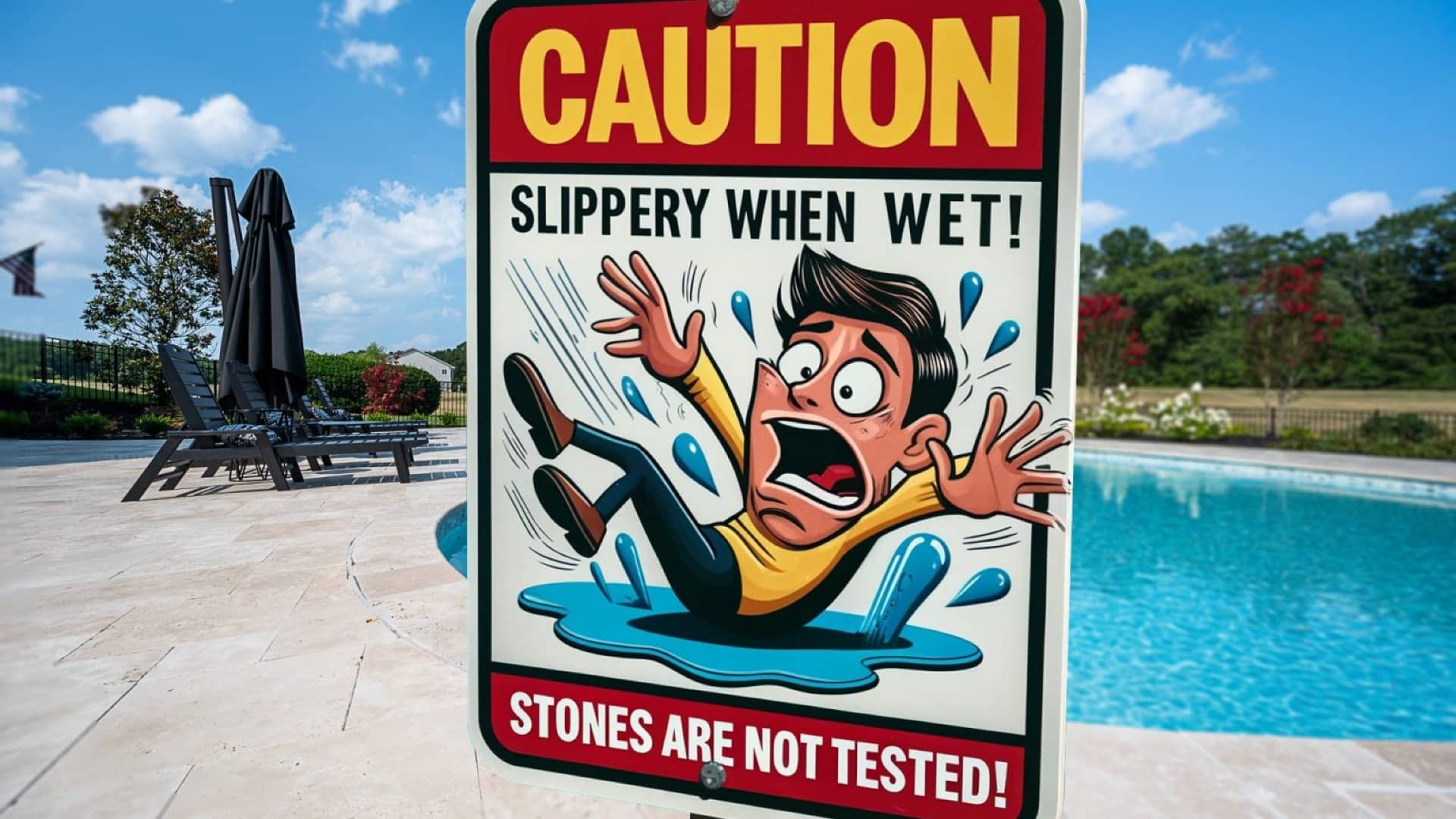
A beautiful pool deck should be inviting, comfortable, and above all — safe. Unfortunately, many homeowners don’t realize that the wrong stone choice or finish can create a slippery pool deck hazard. Slips and falls are among the most common poolside accidents, and they can lead to injuries or expensive liability issues.
That’s why it’s so important to choose non-slip pavers, safe pool tiles, and slip-resistant stone finishes designed for wet outdoor areas.
What Makes a Stone Slippery (or Safe)?
Slip resistance comes down to surface texture, finish, and maintenance. Here’s how finishes compare:
Polished or Honed Finishes
Smooth, glossy, elegant indoors.
Outdoors, especially near water, they can be extremely slippery.
Best avoided for pool decks.
Tumbled Travertine
Slightly rough, with rounded edges.
Offers natural slip resistance and stays cooler underfoot.
A timeless favorite for pool patios.
Sandblasted Marble
Matte and textured, with good grip when wet.
Adds a contemporary, high-end look without sacrificing safety.
Brushed or Antiqued Finishes
Creates subtle ridges for added grip.
Works well for stones like basalt or marble when a softer look is desired.
👉 Key Tip: If you can feel texture with your hand, it usually means better grip under your feet.
Understanding DCOF Slip Ratings (Made Simple)
You may come across the term DCOF (Dynamic Coefficient of Friction) when researching pool pavers.
DCOF measures how slippery a surface is when wet.
Higher numbers = more traction.
For pool decks, a wet DCOF rating above 0.50 is generally considered safe.
Porcelain pavers often test even higher, around 0.65–0.70 wet, making them one of the safest options.
⚠️ Remember: DCOF is just one factor. A stone with a good DCOF score can still be unsafe if water pools, algae builds up, or it’s installed improperly.
Best Non-Slip Stones and Pavers for Pools & Patios
Here’s a breakdown of safe, stylish options:
Travertine Pavers (Tumbled Finish)
Non-slip surface and naturally cool.
Available in warm tones like Ivory, Walnut, and Silver.
One of the most popular and homeowner-trusted choices.
Marble Pavers (Sandblasted Finish)
Perfect for a sleek, luxury backyard look.
Sandblasting adds traction while preserving elegance.
Lighter colors (like Afyon White) also reflect heat, keeping surfaces cooler.
Porcelain Pavers (Matte Finish)
Highly slip-resistant, durable, and fade-proof.
Low-maintenance option that resists staining, mold, and weathering.
Great choice if you want peace of mind with minimal upkeep.
Basalt (Brushed or Tumbled Finish)
Dark and dramatic with a modern vibe.
Textured finishes are essential for slip resistance.
Other Factors Homeowners Should Consider
Choosing the right texture is just one step. For true poolside safety and comfort, think about:
Heat Underfoot – Dark stones absorb more heat and can become uncomfortable in the summer sun. Travertine and lighter marbles tend to stay cooler.
Comfort Barefoot – Overly rough finishes may be safe but uncomfortable for kids. Choose textures that balance safety and comfort.
Drainage & Slope – Even a non-slip stone can be hazardous if water puddles. Proper slope (at least 1–2%) prevents standing water.
Maintenance – Algae, sunscreen, and soap buildup reduce traction. Regular cleaning is essential for long-term safety.
Climate Considerations – In freeze-thaw regions, porous stones may need sealing to prevent cracks, while porcelain and basalt hold up better.
Stones and Finishes to Avoid Around Pools
Polished Marble or Granite – Unsafe when wet.
Glossy Porcelain Tiles – Too slick for poolside areas.
Flat Surfaces Without Drainage – Water pooling makes any material slippery.
Meet Our Star Performers
Material & Finish | DCOF (Dry) | DCOF (Wet) |
|---|---|---|
Silver Travertine - Premium Tumbled | 0.57 | 0.55 |
Ivory Travertine - Premium Tumbled | 0.57 | 0.52 |
Walnut Travertine - Premium Tumbled | 0.64 | 0.60 |
Philly Travertine - Premium Tumbled | 0.58 | 0.53 |
Aegean Grey Marble - Sandblasted | 0.79 | 0.58 |
Afyon White Marble - Sandblasted | 0.76 | 0.63 |
Arctic Grey Marble - Sandblasted | 0.67 | 0.53 |
Pera Cream Marble - Sandblasted | 0.58 | 0.52 |
Tundra Grey Marble - Sandblasted | 0.69 | 0.58 |
Black Basalt - Tumbled + Brushed | 0.70 | 0.50 |
Porcelain Pavers - Matte Finish | ~0.75 | ~0.68 |
Tested for Safety, Backed by Data
Your peace of mind matters. STONELUX reviews slip-resistance data alongside finish, installation, drainage, and maintenance so pool and patio surfaces can be selected for both beauty and practical performance.
The table above shows why tumbled travertine, sandblasted marble, brushed basalt, and matte porcelain are all viable outdoor options when the finish is chosen correctly. The best material is not only the one with the highest number; it is the one that fits the project, climate, comfort expectations, and maintenance plan.
How to Choose the Right Non-Slip Surface
Start with the application. Pool decks, patios, steps, and coping edges all need different levels of texture and barefoot comfort.
Choose the finish carefully. Tumbled, sandblasted, brushed, and matte finishes are usually better around water than polished or glossy surfaces.
Plan for drainage. Even a slip-resistant surface can become unsafe when water is allowed to puddle.
Maintain the surface. Sunscreen, algae, leaves, and soil buildup can reduce traction over time.
Best Overall Choices
For many pool and patio projects, tumbled travertine remains one of the most balanced choices because it combines texture, barefoot comfort, and a naturally cooler feel. Sandblasted marble is a strong luxury option when the design needs a brighter or more refined look. Matte porcelain is especially useful when low maintenance and high slip resistance are the top priorities. Brushed or tumbled basalt works best when the design calls for a darker modern accent and the project can manage heat underfoot.
Frequently Asked Questions
What is the safest stone for a pool deck?
There is no single safest stone for every project. Tumbled travertine, sandblasted marble, brushed basalt, and matte porcelain can all perform well when the finish, drainage, and maintenance plan are correct.
Is travertine slippery around pools?
Tumbled travertine is commonly used around pools because the finish creates texture and the stone stays relatively comfortable underfoot. Polished or overly smooth surfaces should be avoided around wet areas.
Is porcelain good for non-slip pool decks?
Outdoor-rated matte porcelain can be a strong non-slip option, especially for homeowners who want low maintenance, stain resistance, and a clean modern surface. Always confirm the product is rated for exterior wet areas.
Does sealing make stone slippery?
Some sealers can change surface feel, especially topical or glossy products. Around pools, use exterior-appropriate products and avoid creating a shiny film that reduces traction.
Final Thoughts
Choosing a non-slip pool or patio material is about balancing safety, comfort, maintenance, and design. The safest projects combine the right material, the right finish, correct slope, and regular cleaning.