Single Bullnose
Best For: Pools, spas, steps, and classic residential pool edges
Design Note: Rounded front edge creates a softer transition at the pool or step edge.
STONELUX Product Catalog
Natural travertine coping for pools, spas, steps, raised walls, and outdoor living details in Silver, Ivory, Philly, and Walnut tones.
Travertine pool coping creates the finished edge around a pool, spa, step, or raised feature. Use this page to compare tumbled travertine colors, bullnose and eased edge profiles, common coping sizes, matching pavers, installed projects, and current product options.
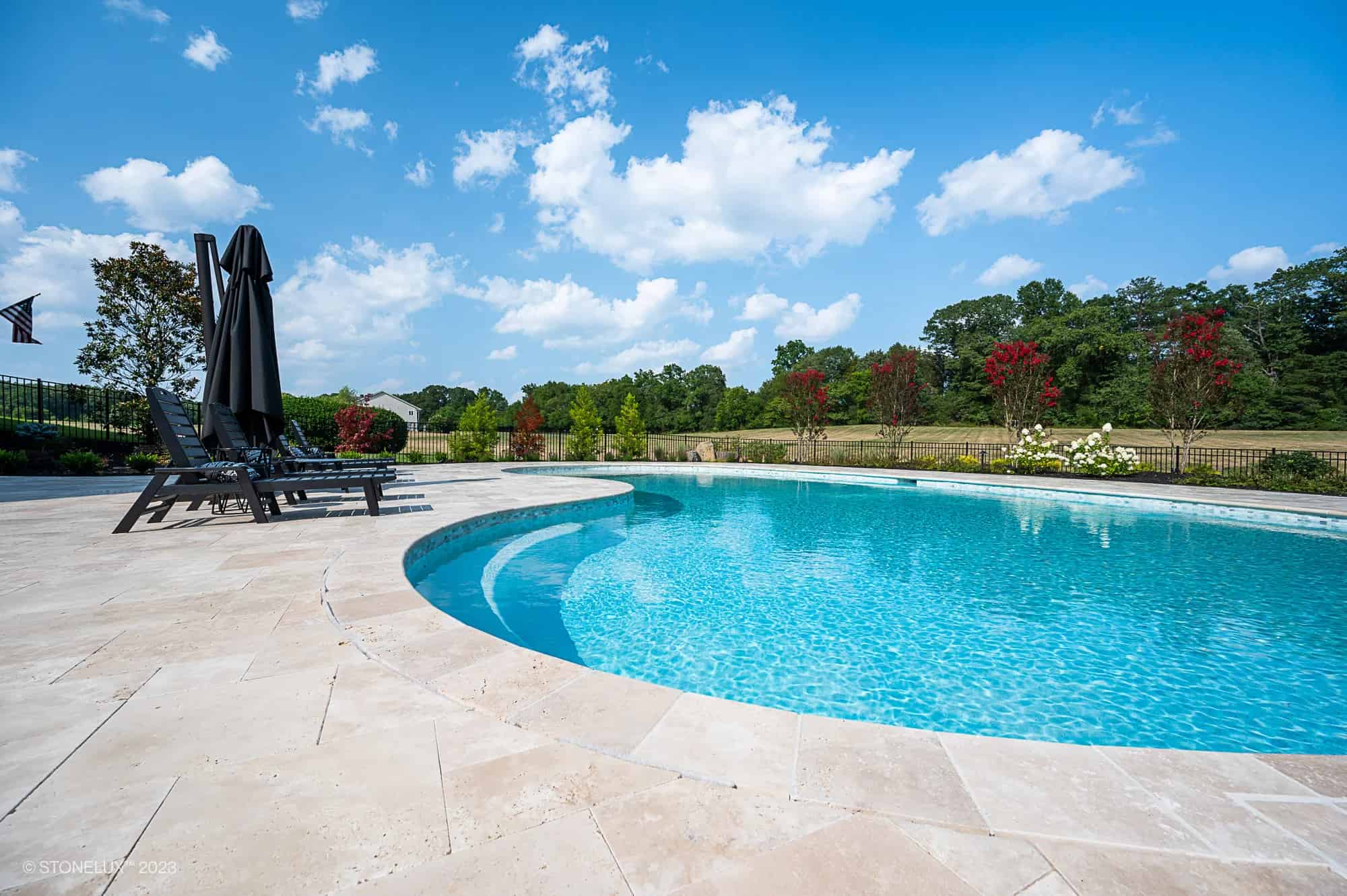
Most travertine coping decisions start with the field stone and the surrounding design. Use the color direction to narrow the project before comparing sizes, profiles, thickness, and availability.
Availability can vary by collection, profile, thickness, pallet quantity, incoming shipments, and warehouse location. Before a pool beam, spa edge, autocover detail, or step layout is finalized, confirm the active coping sizes and lead time.
Review current availability before locking in collection, profile, size, and thickness.
Send project quantities, sizes, and delivery details for quote support.
Talk through pool edges, spas, curves, autocovers, drains, skimmers, and matching pavers before ordering.
Start with the look of the pool edge, then narrow the technical details. Color, profile, size, thickness, and project conditions all affect which travertine coping product makes sense.
| Step | Decision | What To Check |
|---|---|---|
| 1 | Choose the color family | Compare Silver, Ivory, Philly, and Walnut against pool water, house color, deck field, planting, and outdoor furniture. |
| 2 | Confirm material and finish | Tumbled travertine is commonly used outdoors because it gives the stone softened edges and a natural surface texture. |
| 3 | Select the edge profile | Single bullnose gives a rounded pool edge. Eased edge creates a cleaner, straighter line. Specialty profiles help with exposed returns, steps, and wall caps. |
| 4 | Match size to pool shape | Use smaller pieces for spas, curves, and tight details. Use 12x24, 14x24, or 16x24 for straight runs. Use longer pieces when the design needs fewer joints. |
| 5 | Check project conditions | Confirm overhang, corners, drains, skimmers, autocover brackets, wall thickness, step layout, and remodel thickness limits before ordering. |
| 6 | Review samples and availability | Natural stone should be checked in project lighting when possible. Confirm active sizes, profiles, packing, and lead time before final quantities. |
Beyond color and profile, the project details often decide which size, thickness, and edge condition will work best. Review these details before ordering, especially on remodels, raised spas, autocover pools, and freeze-thaw installations.
| Project Detail | What To Confirm | Why It Matters |
|---|---|---|
| Saltwater pools | Use a penetrating, breathable sealer and plan regular rinsing around splash zones. | Salt, chemicals, and mineral residue can be harder on natural stone if cleaning and sealing are ignored. |
| Raised spas | Confirm coping profile, overhang, inside corners, spillway details, and visible cap edges. | Spa edges often expose more sides of the stone and need tighter layout planning. |
| Autocovers | Review tracks, brackets, box lids, overhang, drainage, and service access before setting the stone. | Autocover details can change coping width, thickness, cuts, and joint alignment. |
| Freeze-thaw climates | Plan base preparation, drainage, slope, setting method, movement joints, and sealing. | In Mid-Atlantic and Northeast conditions, trapped moisture can create problems with any natural stone installation. |
| Matching pavers and coping | Coordinate collection, layout, joint alignment, step transitions, and whether the edge should match or contrast. | The pool edge should work with the paver field instead of feeling like a separate material decision. |
| 3cm vs 5cm pieces | Use thinner pieces only where the detail supports them; use thicker pieces when a heavier edge, cap, or tread condition is needed. | Thickness affects finished height, visual weight, overhang, remodel constraints, and installation method. |
The coping profile changes how the pool edge looks and feels. Bullnose coping gives the pool a rounded, softer edge. Eased edge coping creates a straighter line that often fits cleaner or more modern pool designs.
Best For: Pools, spas, steps, and classic residential pool edges
Design Note: Rounded front edge creates a softer transition at the pool or step edge.
Best For: Modern pools, straight runs, raised walls, and cleaner hardscape layouts
Design Note: Straighter profile creates a more linear edge while still softening the exposed corner.
Best For: Steps, landings, raised walls, seat walls, and custom transitions
Design Note: Use when the project needs broader cap pieces or longer exposed edges.
Travertine coping is available in several sizes and thicknesses depending on collection, profile, and current inventory. Match the size to the pool shape first, then confirm thickness based on new-construction, remodel, cap, tread, or special edge conditions.
| Size | Typical Use | Notes |
|---|---|---|
| 6x12 | Spas, curves, radius work, tight details, and smaller edge conditions | Useful when smaller pieces help follow a shape or detail. |
| 12x12 | Corners, landings, step details, and smaller cap conditions | Often used with matching straight-run coping pieces. |
| 12x24 | Common straight pool coping runs | One of the most common sizes for residential pool edges. |
| 14x24 and 16x24 | Wider pool edges, raised spas, and larger straight runs | Good when the project needs a broader coping face or larger visual scale. |
| 12x48, 14x48, 16x48, 24x48 and 24x72 | Modern straight runs, steps, wall caps, landings, and custom outdoor living details | Longer pieces can create a cleaner edge with fewer visible joints when the layout supports them. |
Common Use: Substantial pool coping, wall cap, tread, and new-construction edge conditions
Planning Note: Often selected when the project needs a heavier finished edge or stronger visual profile.
Common Use: Lower-profile coping formats, remodel conditions, and select matching paver systems
Planning Note: Useful where the project needs a thinner piece, but exact SKU and installation method should be confirmed.
Travertine coping usually works best when it is planned with the paver field, step transitions, raised spa details, drains, waterline tile, and outdoor living materials. Matching coping creates a consistent look, while a contrast material can make the pool edge stand out.
Browse real STONELUX pool and spa projects where travertine is tagged as pool coping or spa coping in the installed photo.
Get Inspired by This Project
Get Inspired by This Project
Get Inspired by This Project
Get Inspired by This Project
Get Inspired by This Project
Get Inspired by This Project
Compare current travertine coping products by collection, size, thickness, image, tagline, and popularity. Availability can vary by profile, size, grade, and current inventory.
Showing 10 of 79 products.
Yes. Tumbled travertine is commonly used for pool coping because it creates a natural stone edge around pools and spas. Proper product selection, setting method, drainage, slope, sealing, and maintenance are important.
Bullnose coping has a rounded front edge and gives the pool a softer, more traditional look. Eased edge coping has a straighter profile and is often used for cleaner, more modern pool designs.
Common travertine coping sizes may include 6x12, 12x12, 12x24, 14x24, and 16x24, with larger cap and tread options depending on collection, profile, thickness, and inventory.
Yes. Silver, Ivory, and Philly Travertine coping can be paired with matching travertine pavers for a consistent pool deck, patio, step, and outdoor living layout.
A penetrating, breathable natural stone sealer is generally recommended for travertine pool coping, especially around splash zones, saltwater systems, trees, mulch, and high-traffic outdoor areas.
Yes, but installation matters. In Mid-Atlantic and Northeast climates, base preparation, drainage, slope, setting method, movement joints, and sealing are especially important. Poor drainage or trapped moisture can cause problems with any natural stone installation.
You can view STONELUX project galleries using Silver, Ivory, and Philly Travertine coping around pools, spas, patios, steps, and outdoor living areas.
STONELUX
Premium Natural Stone
Premium supplier of natural stone and porcelain, specializing in travertine, marble, and luxury surfaces.


Contact Info
Warehouse & Showroom:
23700 Pebble Run Place Suite 175
Sterling, VA 20166
Phone: (571) 353-3311
Email: info@stonelux.com
Hours:
Monday-Friday: 08:00 – 16:00
Saturday: Appointment Only
Sunday: Closed