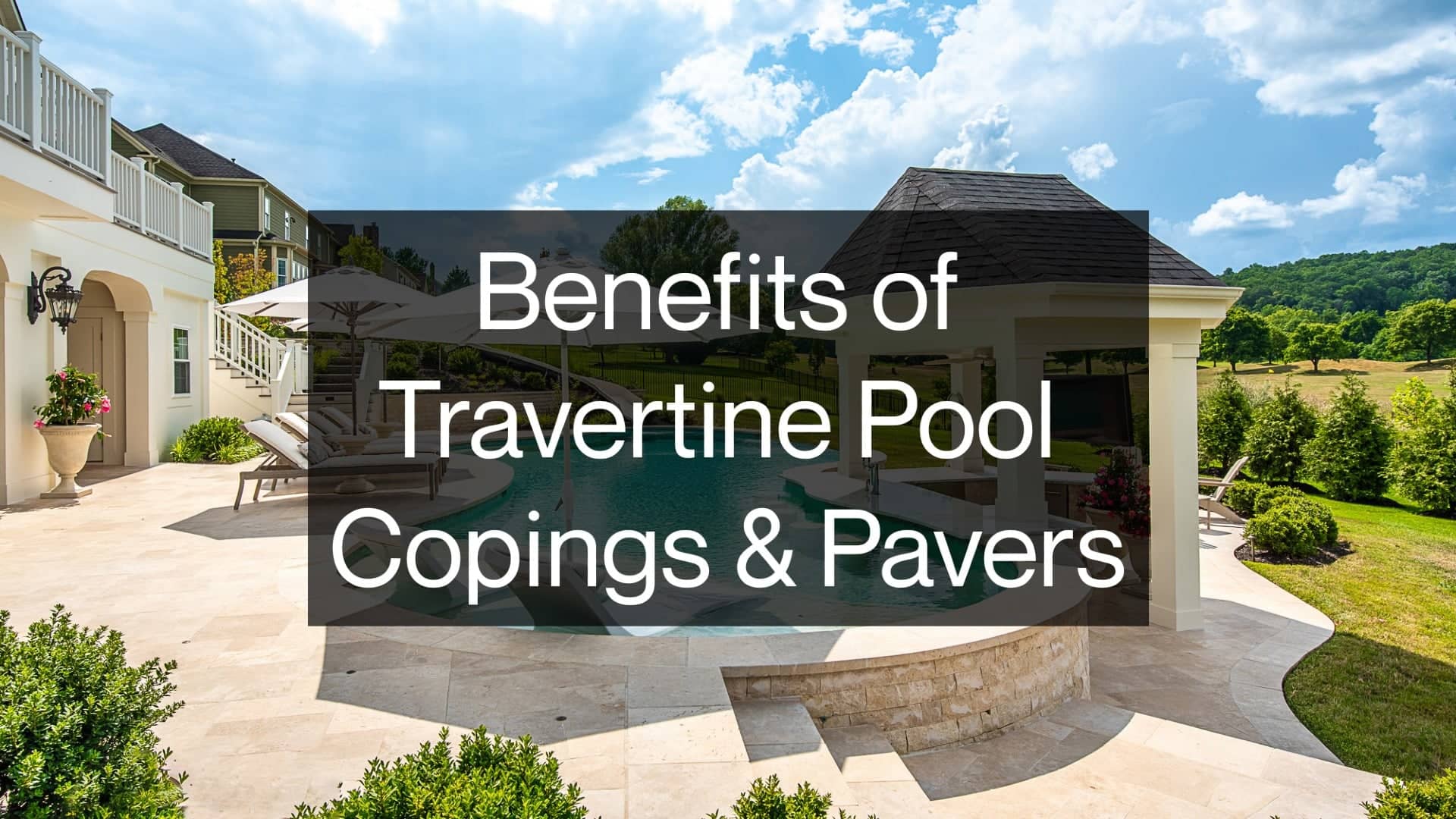
Current collection update: Walnut Travertine is being phased out; Philly Travertine is the recommended collection for new warm-travertine projects. Historical project references below retain the material names originally installed.
Benefits of Using Travertine Pool Pavers
Timeless look. Barefoot comfort. Built for real life outdoors.
At STONELUX, we hand-select premium travertine and finish it for wet-area performance. The result is a pool deck that looks like a boutique resort, feels great under bare feet, and holds up season after season. Explore tones like Ivory, Silver, Walnut, and Philly to match your architecture and light conditions.
What Are Travertine Pool Pavers?
Travertine is a natural limestone formed in mineral-rich springs. Each piece carries subtle movement and tonal variation you can’t fake—soft veining, nuanced color, and a surface that feels organic rather than manufactured. For layout planning, designers often start with the French Pattern overview or our modular 16×24 pavers guide to balance aesthetics, waste, and labor.
Why Travertine Excels Around Pools
1) Barefoot comfort in the sun. Travertine’s light, natural tones help reflect heat, and its open surface structure doesn’t trap warmth the way some synthetics can. Lighter palettes such as Ivory and Silver are especially comfortable for long pool days.
2) Confident traction when wet. Pool safety starts at the surface. We focus on tumbled and sandblasted finishes because their micro-texture increases grip underfoot. If you want the lab context (DCOF, wet vs. dry values, and what they mean in the field), read Don’t Slip Up! The Scoop on DCOF Testing.
3) Fast drainage, quick dry-back. Travertine’s natural pores help surface water dissipate. Combine that with a properly sloped deck and good base prep to minimize puddles and speed up “ready-to-use” time after splashes or storms.
4) Freeze–thaw durability (with proper install). In four-season climates, travertine performs beautifully when installed over a stable, well-drained base and protected with a breathable penetrating sealer. Regional notes and care are in the Travertine Pavers guide.
5) Color that ages gracefully. Because travertine is natural stone, its color runs through the material—not a printed layer. Instead of fading flat, it develops a gentle patina that many homeowners prefer over time.
6) Modular, easy repairs. If a single piece is damaged, you replace that piece. Keep a few attic-stock pavers from your original lot for a perfect match years later.
Design Outcomes You Can See
Light & airy: Ivory or Silver create a bright, sun-washed deck that makes water read bluer, pairing well with white stucco, painted brick, and light woods.
Warm & grounded: Walnut and Philly introduce deeper color and movement that complement dark windows, bronze hardware, and manicured greenscapes.
Whichever palette you choose, keep the deck and waterline cohesive with matching coping and, if your site includes stairs or terraces, carry the look using oversized treads.
Smart Format Choices
French Pattern (3 cm). Four-piece sets deliver organic movement and efficient coverage with fewer visible seams. Start with the French Pattern overview above to understand piece ratios and layout tips.
16×24 (3 cm). Clean, modern lines that make furniture planning easier and keep sightlines calm. The 16×24 guide above walks through stacked vs. running bond, joint options, and border strategies.
Coping: The Edge That Makes the Pool
The coping profile defines how the pool feels at the waterline and how swimmers interact with the edge.
Bullnose: Soft, rounded grip—classic and comfortable for kids and loungers.
Eased/straight edge: Crisp, modern line that reads refined and architectural.
Browse shapes and sizes on our travertine coping page, or see a frequently specified example like the Ivory 12×24 Bullnose Coping. For long runs or landings, carry the look with an oversized tread such as the Ivory 24×72×2 Tread.
Specs That Matter (At a Glance)
Typical thickness: ~3 cm for pavers; coping available in 2" and 3 cm depending on profile.
Common sizes: French Pattern set; 16×24 field units; oversized 24×72 treads for stairs/landings.
Surface: Tumbled or sandblasted textures for wet-area traction.
Use cases: Pool decks, coping, patios, walkways, steps, seat walls, outdoor kitchens.
For care, sealing intervals, and regional guidance, refer to the Travertine Pavers guide.
Installation & Best Practices
Base & drainage. Build on a stable, well-drained base; include proper slope away from the pool and strategic drains where needed.
Movement joints. Honor expansion/movement joints to accommodate seasonal change.
Cutting & bonding. Wet-saw for neat cuts; back-butter larger pieces for a uniform bond.
Sealing. Finish with a breathable penetrating sealer; in heavy splash or saltwater settings, re-seal more frequently.
Maintenance Made Simple
Routine care. Rinse dust and pollen, spot-treat organic debris promptly, and pressure-wash at low settings when needed.
Sealing cadence. Re-seal every 2–3 years (or as your environment dictates). The goal is to preserve breathability while protecting from staining—see details in the Travertine Pavers guide above.
Cost, Value & Lifecycle
Long-view economics. While travertine may price above plain concrete initially, its longevity, timeless look, and modular repairability typically mean lower lifetime cost. It’s a “buy once, enjoy for decades” material—especially when you plan the full kit (pavers, coping, and treads) for consistent color and finish across zones.
Quick FAQ
Are travertine pavers slippery? With tumbled or sandblasted textures, they provide confident traction in wet areas. For a plain-English breakdown of DCOF and what to look for, see our guide linked above.
Do they stay cool in summer? Lighter travertine tones reflect heat better than many dark or synthetic surfaces, so decks stay more comfortable for bare feet.
Can travertine handle freeze–thaw? Yes—when installed on a well-drained base with movement joints and maintained with breathable sealers. Regional notes are in the Travertine Pavers guide above.
What formats work best near pools? French Pattern for organic flow and efficient coverage; 16×24 for clean, modern grids.
How do I finish the waterline? Choose bullnose for a soft, classic grip or eased/straight edge for a crisp architectural line. Explore options on our coping page linked above.
See Projects & Plan Your Deck
Browse our project archive for real-world layouts, color mixes, and coping ideas, then narrow to the palette that fits your home and light exposure. When you’re ready, our team will help with quantities, layout patterns, and the finishing kit that ties it all together.
Projects: STONELUX Project Archive