Current collection update: Walnut Travertine is being phased out; Philly Travertine is the recommended collection for new warm-travertine projects. Historical project references below retain the material names originally installed.
Travertine pool coping is one of the most popular natural stone choices for swimming pools because it does several jobs at once. It finishes the edge of the pool, protects the structure, creates a comfortable place to grip or sit, and frames the entire pool design.
At STONELUX, travertine pool coping is not just one product. Our Travertine Pool Copings category includes 79 coping, cap, and tread options across multiple collections, sizes, profiles, and thicknesses. That variety is helpful, but it can also make the selection process confusing if you are not sure what to look for.
This guide explains how to choose the right travertine coping color, edge profile, size, thickness, and finish for your pool project. It also covers installation, maintenance, climate considerations, and how to estimate how much coping you need.
Quick Buying Help
Need travertine pool coping for a project? STONELUX stocks travertine pool copings in Silver, Ivory, and Philly Travertine, including popular bullnose and eased edge options. Use this guide to narrow the color, profile, size, and thickness, then check current availability before ordering.
Start here: Browse Travertine Pool Copings or request samples and project guidance.
Travertine Pool Coping Color Comparison
Option | Best For | Look |
|---|---|---|
Silver Travertine | Modern and transitional grey pool decks | Cool grey, silver, beige, and soft earth movement |
Ivory Travertine | Bright classic pools and resort-style patios | Cream, beige, and light neutral tones |
Philly Travertine | Warm rustic or mixed-material designs | Blended beige, gold, tan, cream, and grey variation |
Walnut Travertine | Natural landscapes and warm traditional settings | Brown, tan, and richer earth-tone movement |
Best Travertine Pool Coping Choices by Project Type
Best travertine coping for modern pools: Silver Travertine, especially when the pool design uses grey tones, black accents, or contemporary furniture.
Best travertine coping for bright classic pools: Ivory Travertine, especially when the goal is a lighter resort-style pool area.
Best rustic or blended option: Philly Travertine, especially when the project needs beige-grey variation and a more natural look.
Best warm natural option: Walnut Travertine, especially for earth-tone landscapes and traditional outdoor living spaces.
Ready to compare current options? Browse all travertine pool copings to review available colors, profiles, sizes, and matching material options.
What Is Pool Coping?
Pool coping is the stone cap installed along the top edge of a swimming pool. It covers the bond beam, creates a finished transition between the pool shell and the deck, and gives swimmers a comfortable edge to hold onto.
A good pool coping system does more than look nice. It helps:
Protect the top edge of the pool structure
Cover exposed concrete and construction joints
Create a comfortable edge for swimmers
Improve safety around the pool
Direct water away from the pool shell
Visually frame the water and surrounding deck
Because coping is one of the most-touched surfaces around a pool, the material needs to be comfortable, durable, slip-resistant, and visually compatible with the rest of the outdoor space.
Why Choose Travertine for Pool Coping?
Travertine has become a favorite material for pool coping because it combines natural texture with practical performance. It works with traditional homes, Mediterranean-style landscapes, rustic outdoor spaces, and modern pool designs.
It Stays Comfortable Underfoot
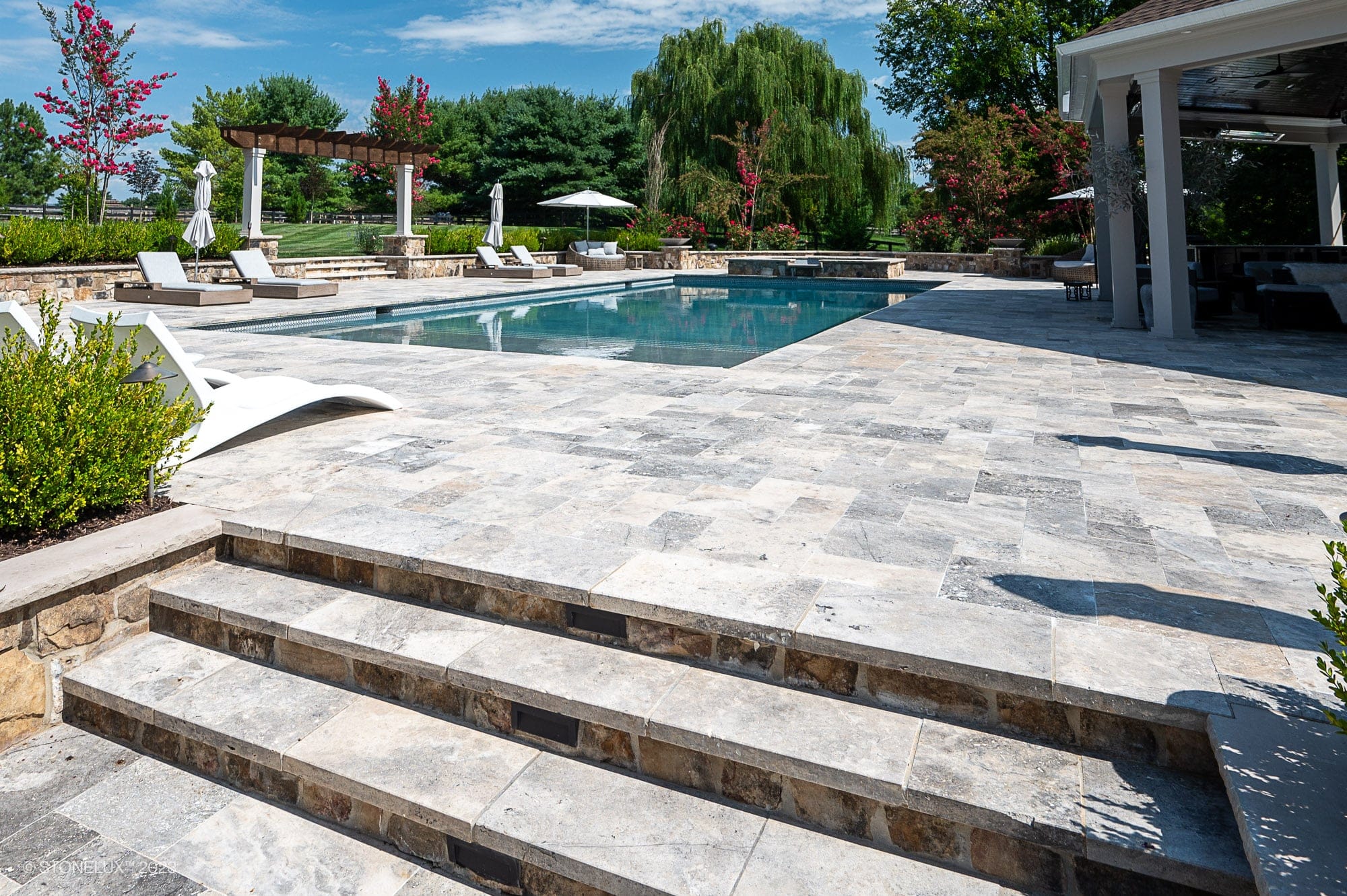
Travertine is known for staying cooler than many darker or denser hardscape materials. Lighter travertine colors, especially Ivory and Silver, are often more comfortable for bare feet during hot summer days.
It Has Natural Texture
Tumbled travertine has a matte, textured surface that works well around wet areas. This makes it a strong choice for pool coping, pool decks, raised spas, and outdoor steps.
It Looks Timeless
Travertine has natural movement, pits, variation, and soft color shifts. Instead of looking manufactured, it looks like a material that belongs outdoors.
It Works With Matching Pavers
One major advantage of travertine is that coping can be paired with matching pavers. This allows the pool edge and pool deck to feel like one complete system rather than two separate materials.
It Performs Well When Properly Installed
Premium travertine can perform well in freeze-thaw climates when the stone is dense, the installation is correct, drainage is handled properly, and the surface is maintained with appropriate sealing.
For Mid-Atlantic projects, also see our guide to the best pool coping materials for Virginia’s climate, which compares travertine, marble, porcelain, and basalt for freeze-thaw performance, heat, maintenance, and design flexibility.
STONELUX Travertine Pool Coping Options
The STONELUX Travertine Pool Copings category includes 79 products, with options across collections, profiles, sizes, and thicknesses. The category is structured around real selection filters such as Color Tone, Profile, Size, and Thickness.
Common options include:
Single Bullnose coping
Eased Edge coping
Double Bullnose coping
12x24, 14x24, 16x24, 24x24, 24x36, and specialty sizes
3cm and 5cm thickness options
For the full product selection, browse the Travertine Pool Copings category.
Choosing the Right Travertine Pool Coping Color
Color is usually the first decision homeowners make. The right choice depends on your home, pool shape, waterline tile, surrounding deck, landscaping, and the overall mood you want.
Silver Travertine Pool Coping
Silver Travertine is one of the strongest choices for modern and transitional pool designs. It blends gray, silver, beige, and soft earth tones, which makes it easier to pair with both cool and warm exterior palettes.
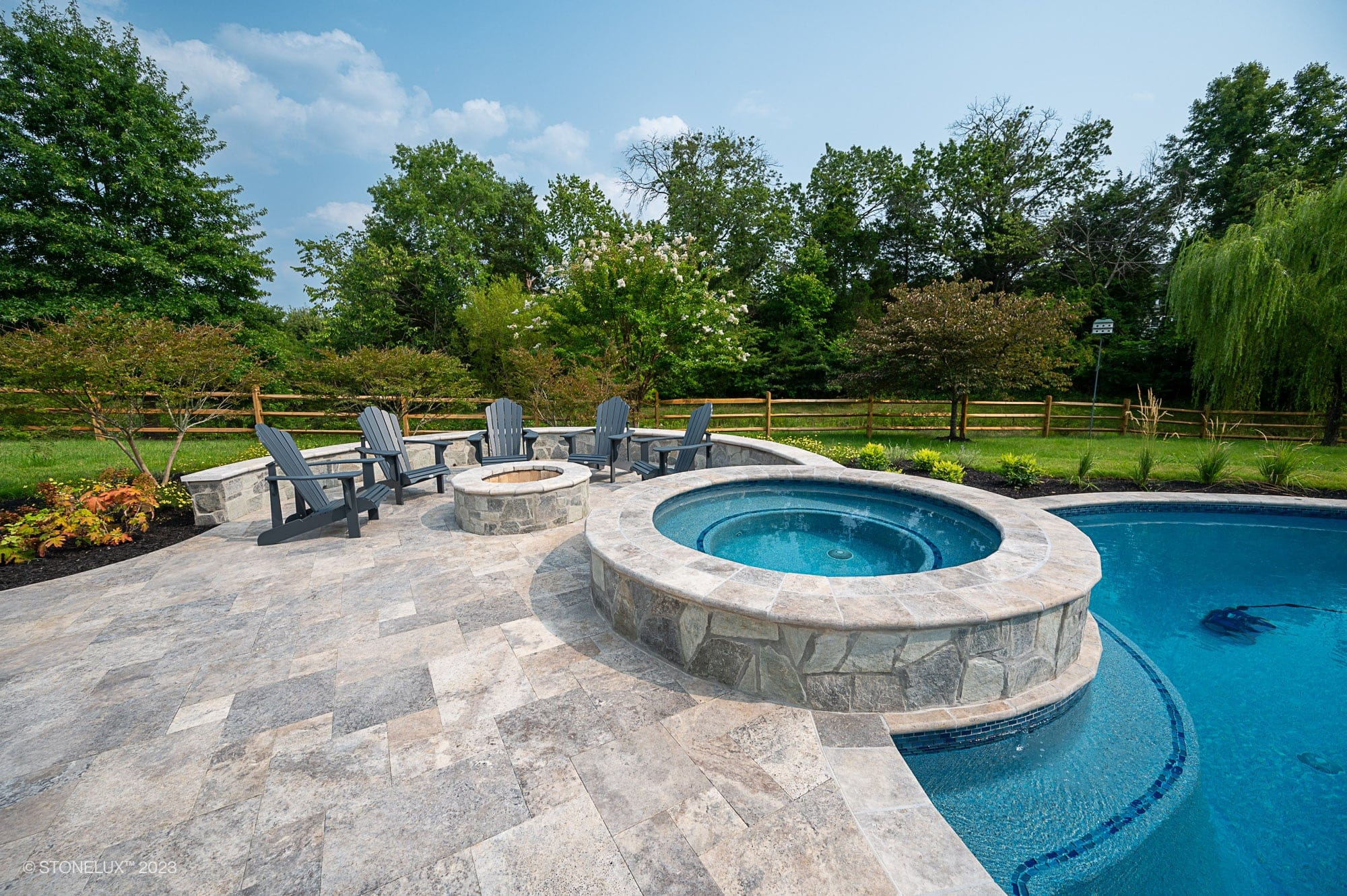
Silver Travertine works especially well with:
Modern homes
Gray or white exteriors
Dark waterline tile
Black window frames
Contemporary outdoor furniture
Large-format pool decks
It is also a smart choice when you want a gray natural stone but do not want the pool area to feel too cold or flat. Silver Travertine has more warmth and texture than many gray porcelain or concrete options.
For a deeper comparison, read our Silver Travertine vs Tundra Grey Marble guide, which compares both materials for pool decks, coping, and real project applications.
You can also review our Northern Virginia Silver Travertine project analysis, which explains why homeowners choose Silver Travertine for local pool and patio projects.
Project references include Silver Travertine pool installations in Chantilly and Great Falls, Virginia.
Ivory Travertine Pool Coping
Ivory Travertine is the classic light travertine option. It creates a bright, clean, resort-style pool environment and reflects sunlight well.
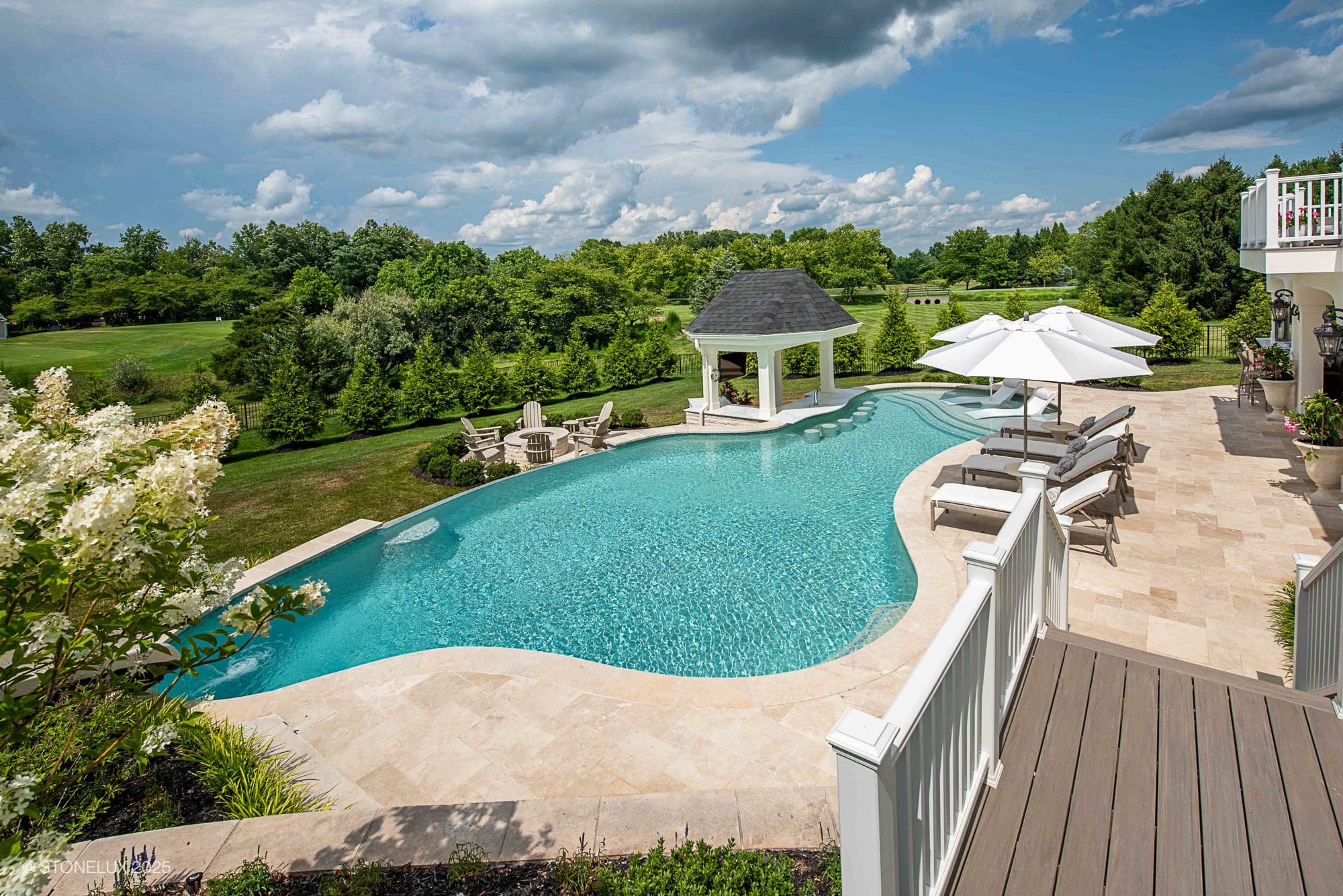
Ivory Travertine works especially well with:
Traditional homes
Mediterranean-style architecture
Cream, beige, or white exteriors
Bright pool decks
Formal outdoor spaces
Resort-style backyards
It is often selected when the goal is to make the pool area feel larger, lighter, and more open.
STONELUX category examples include Ivory Travertine Tumbled Single Bullnose coping in several sizes, including 12x24, 14x24, 16x24, 24x24, and 24x36, along with Eased Edge and Double Bullnose options.
For a real installed example, see the Leesburg Grecian Oasis Ivory Travertine pool project reference.
Philly Travertine Pool Coping
Philly Travertine, sometimes referred to as Philadelphia Travertine, is a blended travertine with warm beige, tan, cream, and gray movement. It is one of the most flexible travertine colors because it can work with both warm and cool materials.
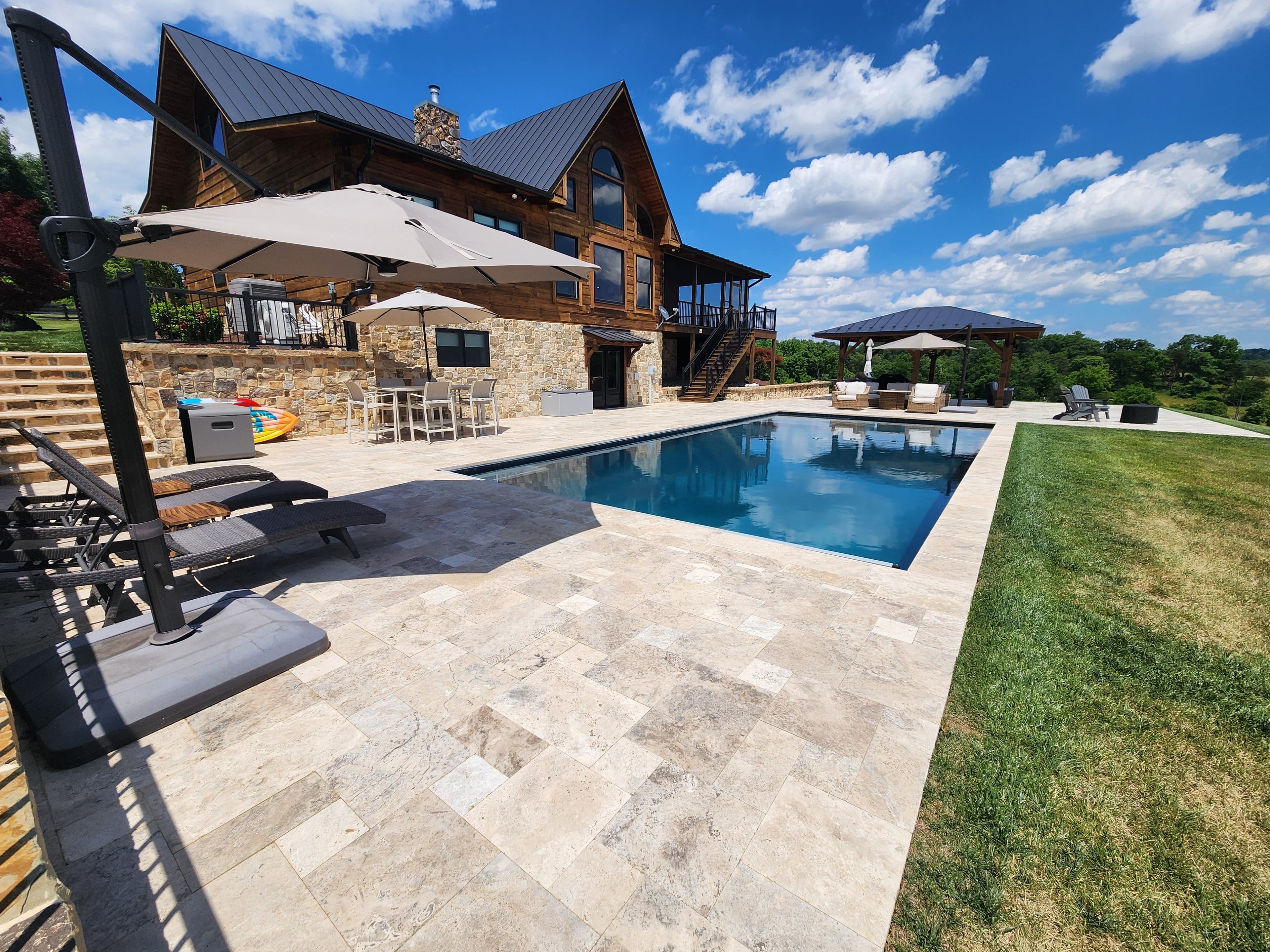
Philly Travertine works especially well with:
Transitional homes
Existing pool renovations
Mixed-material patios
Beige or gray hardscapes
Natural landscapes
Projects where color variation is desired
STONELUX category examples include Philly Travertine Tumbled Single Bullnose and Eased Edge coping in sizes such as 12x24, 14x24, 16x24, and larger-format options.
Project references include Philly Travertine pool and patio projects in Winchester, Virginia and Annapolis, Maryland.
Walnut Travertine Pool Coping
Walnut Travertine is the warmest and richest travertine option. It has brown, tan, and earth-tone movement that pairs beautifully with natural landscapes and rustic architecture.
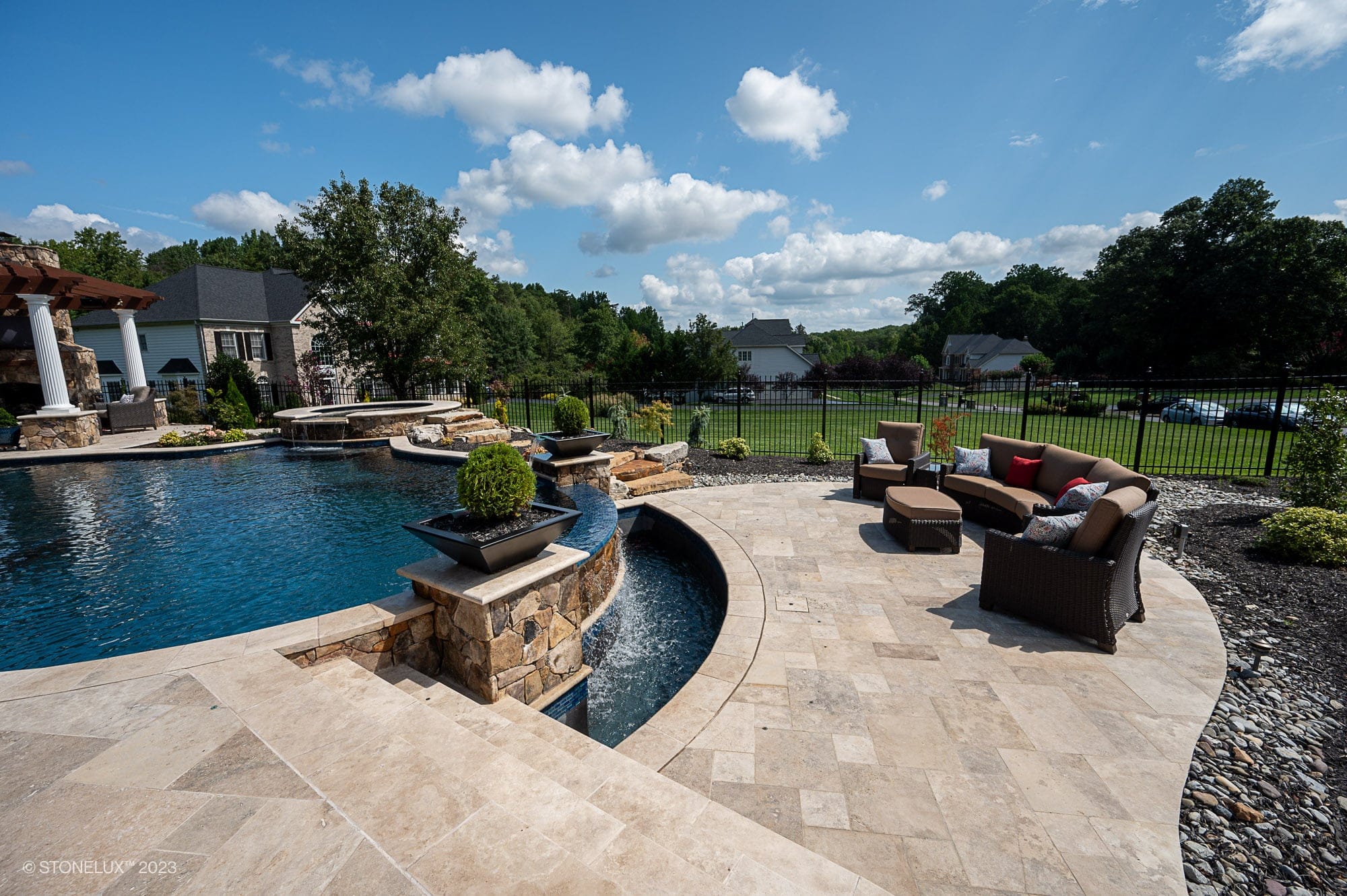
Philly Travertine works especially well with:
Rustic homes
Woodland settings
Natural stone walls
Warm exterior palettes
Traditional outdoor living spaces
Mediterranean-inspired designs
Walnut is darker than Ivory or Silver, so it can feel warmer under direct sun. For that reason, it is often chosen for its character and contrast rather than maximum coolness.
Travertine Pool Coping Profiles
The profile is the shape of the visible edge. It affects the comfort, safety, and design style of the pool.
STONELUX Travertine Pool Copings are organized around three main profiles: Single Bullnose, Eased Edge, and Double Bullnose.
For a focused edge-profile comparison, read our Bullnose vs. Eased Edge Pool Copings guide before choosing the final coping profile.
Single Bullnose Coping
Single Bullnose has one rounded edge facing the pool. This is the most common and most versatile pool coping profile.
Best for:
Most residential pools
Comfortable pool edges
Traditional and modern designs
Families with kids
Projects where people will sit on the pool edge
Why choose it:
Comfortable to grip
Smooth rounded appearance
Timeless look
Works with most pool shapes
For most homeowners, Single Bullnose is the safest default choice.
Eased Edge Coping
Eased Edge coping has a straighter, more squared appearance with lightly softened edges. It creates a cleaner and more contemporary line.
Best for:
Modern pools
Rectangular pool designs
Minimalist architecture
Large-format decks
Projects with sharp, clean geometry
Why choose it:
Clean modern profile
Less rounded appearance
Pairs well with contemporary pavers
Good for architectural pool designs
Double Bullnose Coping
Double Bullnose has rounded edges on both sides. It is often used when both edges of the stone may be visible or when a more decorative look is desired.
Best for:
Formal pool designs
Raised walls
Exposed edges
Luxury projects
Traditional architecture
Why choose it:
Decorative profile
Finished look on both sides
Elegant appearance
Useful for more detailed installations
Travertine Pool Coping Sizes Explained
Coping size affects the look of the pool edge, the number of joints, and how the coping aligns with the deck.
12x24 Travertine Pool Coping
12x24 is the most common and versatile coping size.
Best for:
Most residential pools
Standard pool edges
Rectangular pools
Matching 12x24 or French pattern decks
Why choose it:
Easy to install
Good proportions
Widely available
Works with many layouts
14x24 Travertine Pool Coping
14x24 creates a slightly wider and more substantial pool edge.
Best for:
Larger residential pools
Projects wanting a more premium edge
Pools with wider bond beams
Designs where 12x24 feels too narrow
Why choose it:
More presence than 12x24
Balanced appearance
Still easy to coordinate with pavers
16x24 Travertine Pool Coping
16x24 is a larger coping format often used for more substantial pool edges.
Best for:
Luxury residential pools
Larger pool decks
Modern projects
Wide coping details
Why choose it:
More dramatic appearance
Fewer visual interruptions
Stronger presence around the pool
24x24, 24x36, and Larger Formats
Larger sizes such as 24x24, 24x36, 24x48, and 24x72 are often used for special design conditions, larger caps, stair treads, or custom details.
Best for:
Modern pools
Oversized coping details
Auto-cover applications
Wall caps
Stair treads
Custom pool features
6x12 and 12x12 Travertine Coping
Smaller pieces are useful for detail work.
Best for:
Curved pools
Raised spas
Radius work
Tight corners
Small pool details
Why choose it:
Easier to follow curves
Better for detailed cuts
Useful for specialty transitions
Thickness, Quantity, and Cost Factors
Thickness matters for both appearance and performance.
3cm Travertine Coping
3cm, or approximately 1-3/16 inches, is commonly used for many residential pool projects.
Best for:
Standard residential pools
Bond beam installations
Projects where weight matters
Cost-conscious designs
Advantages:
Easier handling
Lower material weight
Often more economical
Good for standard applications
5cm Travertine Coping
5cm, or approximately 2 inches, creates a heavier, more substantial edge.
Best for:
Premium pool projects
Raised bond beams
Stair treads
Wall caps
Commercial use
Projects needing a thicker visual edge
Advantages:
Stronger visual presence
More substantial feel
Better for exposed edges
Often preferred for luxury applications
When choosing between 3cm and 5cm, ask your installer what the pool structure and installation detail require.
Tumbled Finish: Why It Works Around Pools
Most travertine pool coping uses a tumbled finish. Tumbled travertine has softened edges, natural texture, and a more relaxed outdoor look.
Benefits of tumbled travertine:
Better traction than polished surfaces
Comfortable under bare feet
Natural, aged appearance
Good match for outdoor environments
Less slippery appearance when wet
For pool coping, tumbled travertine is usually more practical than polished or highly honed finishes.
Travertine Pool Coping vs Other Materials
Travertine and marble are both premium natural stone choices, but they create different effects.
Choose Travertine If You Want:
Natural texture
Warmer tones
Mediterranean character
Cooler surface feel
Rustic or traditional appeal
Strong value for natural stone
Choose Marble If You Want:
More refined movement
Cooler gray tones
Contemporary luxury
Denser stone
A more architectural look
Both materials can work beautifully around pools. The better choice depends on the design style, budget, color palette, and maintenance expectations.
If you are considering a brighter white or refined grey pool edge, see our Marble Pool Coping Buyer's Guide for color, finish, size, and profile guidance.
For a direct material comparison, see our Silver Travertine vs Tundra Grey Marble guide.
For another marble design reference, see the Tundra Grey Marble pool deck guide with coping options and real projects.
Travertine vs Basalt, Porcelain, and Other Pool Coping Materials
Travertine is not the only option for pool coping. Homeowners also compare it with marble, basalt, porcelain, concrete, and bluestone.
Travertine is usually strongest when the goal is:
Comfortable barefoot use
Natural variation
Warm or neutral tones
Matching paver systems
Traditional or transitional design
Basalt is often stronger when the goal is a dramatic dark coping line. Porcelain can work for very uniform modern designs. Marble is often chosen for luxury gray or white pool decks.
For dark coping comparisons, see our guide to Black Pool Coping: Basalt vs Marble vs Porcelain.
How Much Travertine Pool Coping Do You Need?
Pool coping is usually estimated by linear foot because it runs around the pool perimeter.
To estimate your quantity:
Measure the full pool perimeter.
Add the spa perimeter if the spa also needs coping.
Add raised walls, steps, or other coping areas.
Add 5–10% for cuts, corners, waste, and breakage.
Confirm the final quantity with your installer or supplier.
A 12x24 coping piece covers approximately 2 linear feet along the pool edge. Other sizes may require different calculations depending on orientation and layout.
Travertine Pool Coping Cost Factors
Travertine pool coping cost depends on several factors:
Stone collection
Size
Thickness
Profile
Finish
Quantity
Availability
Shipping distance
Special order requirements
In general, thicker pieces, larger formats, and more specialized profiles cost more than standard sizes. Freight also matters because natural stone is heavy.
For an accurate quote, send STONELUX:
Pool perimeter
Desired color
Preferred profile
Size
Thickness
Delivery location
Project timeline
Installation Overview
Travertine pool coping should be installed by an experienced mason, pool contractor, or hardscape installer.
This section is a planning overview, not a substitute for project-specific installation instructions. Confirm installation details with your pool contractor or installer based on your pool structure, climate, setting materials, drainage, and local code requirements.
A quality installation usually includes:
1. Bond Beam Preparation
The concrete bond beam must be clean, stable, level, and ready to receive stone.
2. Layout Planning
The installer should dry-lay pieces before setting them permanently. This helps manage cuts, corners, joints, and color variation.
3. Proper Setting Material
The coping should be installed with suitable mortar or setting materials designed for exterior wet-area use.
4. Overhang Control
Many pool coping installations use an overhang of approximately 1 to 1.5 inches, depending on the pool design and installer preference.
5. Drainage Slope
Coping should be installed so water does not collect against the pool structure or behind the stone.
6. Expansion Joint Treatment
The joint between coping and deck should be handled with a flexible, pool-rated sealant where required.
7. Sealing
After installation and curing, travertine should be sealed with a penetrating natural stone sealer.
Sealing, Maintenance, and Freeze-Thaw
Travertine is a natural stone, so sealing and basic care matter.
Should Travertine Pool Coping Be Sealed?
Yes. Sealing helps reduce staining and makes the stone easier to clean.
Use a breathable penetrating sealer designed for natural stone. Avoid topical coatings that can make the surface slippery or trap moisture.
How Often Should Travertine Be Sealed?
Most residential pool areas should be resealed every 1–3 years depending on use, sun exposure, pool chemicals, and cleaning habits.
High-use pools, saltwater pools, and heavily landscaped areas may need more frequent maintenance.
How To Clean Travertine Pool Coping
Use:
Water
pH-neutral stone cleaner
Soft brush
Light pressure washing when appropriate
Avoid:
Vinegar
Lemon or citrus cleaners
Acidic cleaners
Bleach-heavy cleaners
Harsh degreasers
Metal brushes
Saltwater Pool Maintenance
Travertine can work around saltwater pools, but the stone should be rinsed periodically to reduce salt buildup. Sealer selection is also important for saltwater environments.
Travertine Pool Coping in Freeze-Thaw Climates
A common misconception is that travertine cannot be used in cold climates. The truth is more nuanced.
Travertine can perform well in freeze-thaw climates when:
The stone is dense and suitable for exterior use
The installation allows proper drainage
Water is not trapped below or behind the stone
The coping is sealed and maintained
The base and setting system are appropriate
Many failures blamed on stone are actually caused by poor drainage, incorrect installation, trapped water, or unsuitable setting materials.
For climate-specific comparisons, read our article on the best pool coping materials for Virginia’s climate.
Real Travertine Pool Project References
One of the best ways to choose travertine is to see it installed in real projects.
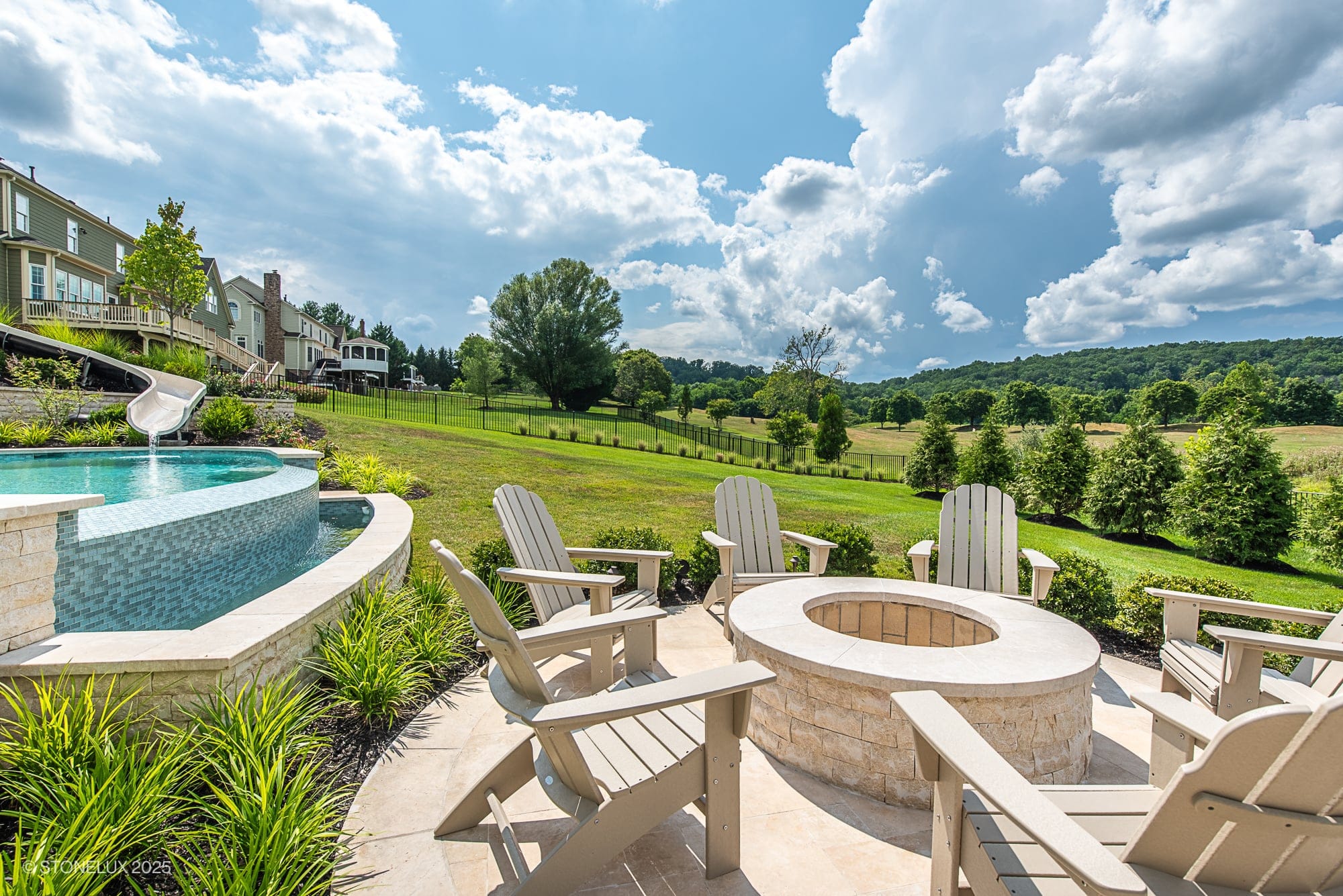
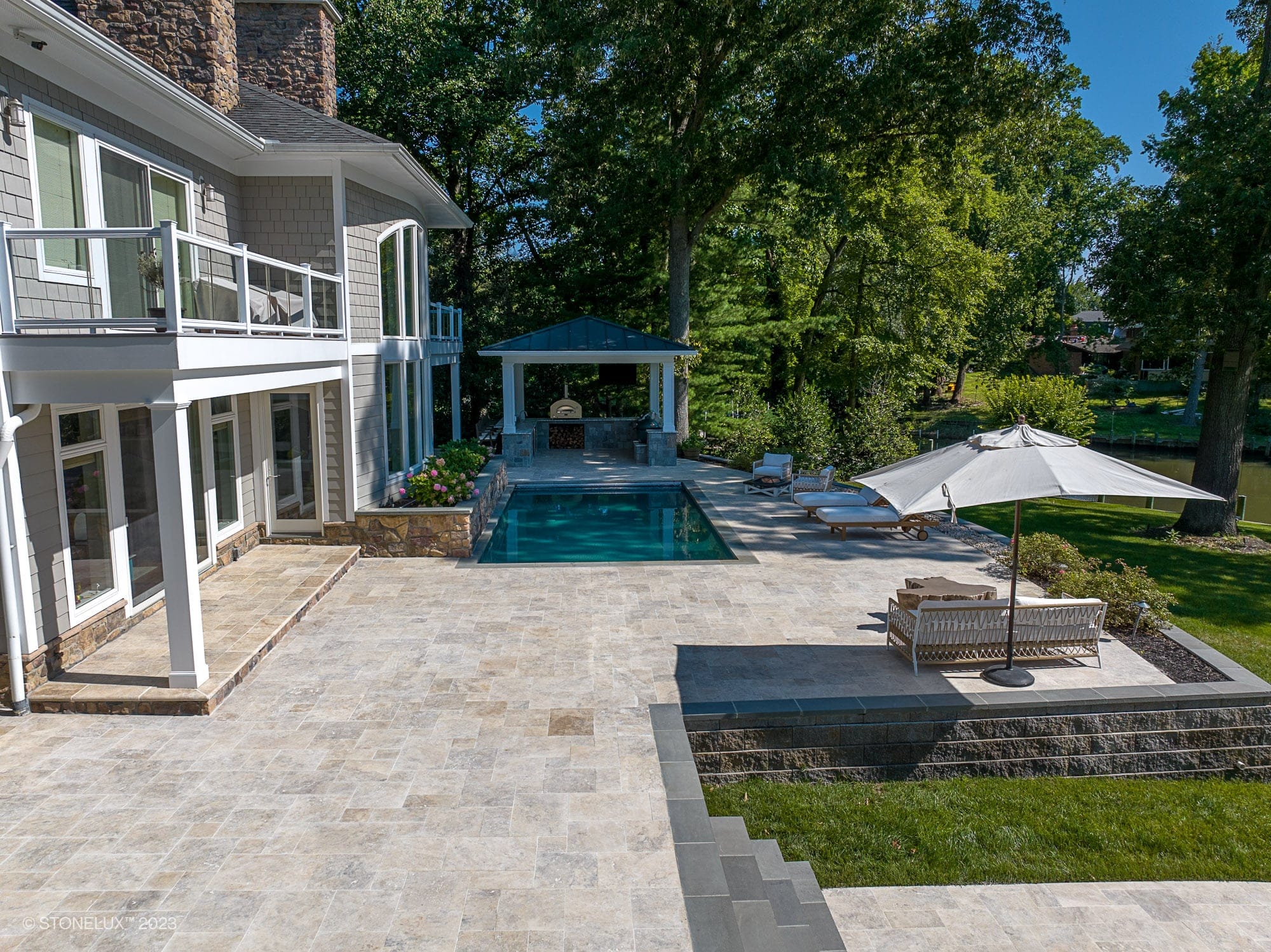
STONELUX project and lookbook references include:
Silver Travertine pool project in Chantilly, Virginia.
Silver Travertine pool landscape in Great Falls, Virginia.
Ivory Travertine pool project in Leesburg, Virginia.
Philly Travertine pool and patio project in Winchester, Virginia.
Philly Travertine pool project in Annapolis, Maryland.
These projects show how different travertine colors perform in real outdoor settings, not just in product photos.
Popular STONELUX Travertine Pool Coping Examples
Examples from the STONELUX Travertine Pool Copings category include:
The product cards above cover the key buying paths: Ivory, Philly, and Silver Travertine coping; Single Bullnose, Eased Edge, and Double Bullnose profiles; and larger-format or tread options for more detailed pool edges.
The category also includes additional Silver, Walnut, oversized, tread, and specialty coping options.
How To Choose the Right Travertine Pool Coping
Here is a simple decision path.
Choose Silver Travertine If:
You want a modern gray natural stone that still feels warm and textured.
Choose Ivory Travertine If:
You want a bright, classic, resort-style pool area.
Choose Philly Travertine If:
You want a blended beige-gray material that works with many colors.
Choose Philly Travertine If:
You want a warmer, rustic, earth-tone pool edge.
Choose Single Bullnose If:
You want the safest and most common residential coping profile.
Choose Eased Edge If:
You want a cleaner, more modern look.
Choose Double Bullnose If:
You need a more decorative or finished edge on both sides.
Choose 3cm If:
You have a standard residential installation and want a lighter, more economical option.
Choose 5cm If:
You want a thicker, more substantial edge or need the stone for treads, caps, raised walls, or heavier-duty applications.
Why Buy Travertine Pool Coping From STONELUX?
STONELUX specializes in premium natural stone for pool and patio projects.
Reasons homeowners, designers, and contractors choose STONELUX:
Large travertine coping selection
79 products in the Travertine Pool Copings category
Multiple collections, sizes, profiles, and thicknesses
Matching pavers and treads available
Project experience throughout Virginia, Maryland, and the Mid-Atlantic
Natural stone expertise
Local pickup in Sterling, Virginia
Nationwide shipping available
Whether you are building a new pool, renovating an existing one, or matching coping to a patio or outdoor living space, our team can help you compare colors, profiles, sizes, and quantities.
Frequently Asked Questions
What is travertine pool coping?
Travertine pool coping is the natural stone cap installed along the top edge of a swimming pool. It covers the bond beam, creates a finished pool edge, and provides a comfortable surface for swimmers to touch, sit on, and walk across.
Is travertine slippery around pools?
Tumbled travertine has a textured surface that provides good traction around wet areas. It is one of the reasons travertine is widely used for pool coping and pool decks.
Does travertine pool coping get hot?
Travertine generally stays cooler than many darker or denser materials. Lighter colors such as Ivory and Silver are usually the most comfortable underfoot.
What is the most popular travertine pool coping color?
Silver and Ivory are among the most popular choices. Silver works especially well for modern pool designs, while Ivory is a classic choice for bright, resort-style pool areas.
What is the most popular pool coping profile?
Single Bullnose is the most popular travertine pool coping profile because it is comfortable, versatile, and works with most residential pool designs.
What is the best travertine pool coping size?
12x24 is the most common and versatile size. Larger sizes such as 14x24 and 16x24 create a more substantial edge, while 6x12 works well for curves and radius details.
Should I choose 3cm or 5cm travertine coping?
3cm is common for many standard residential pools. 5cm creates a thicker, more substantial edge and is often preferred for raised details, wall caps, stair treads, and premium applications.
Does travertine need to be sealed?
Yes. Travertine should be sealed with a penetrating natural stone sealer after installation and resealed periodically to reduce staining and make cleaning easier.
Can travertine be used in freeze-thaw climates?
Yes, premium travertine can perform well in freeze-thaw climates when properly selected, installed, drained, sealed, and maintained.
How much travertine coping do I need?
Measure the total pool perimeter in linear feet and add 5–10% for cuts, corners, and waste. STONELUX can help calculate the final quantity based on your pool layout.
Can travertine coping match travertine pavers?
Yes. One of travertine’s biggest advantages is that coping can be paired with matching pavers, treads, and wall caps for a complete pool and patio system.
Where can I buy travertine pool coping?
STONELUX offers travertine pool coping with local pickup in Sterling, Virginia and nationwide shipping. Browse the Travertine Pool Copings category or contact our team for samples and a project quote.