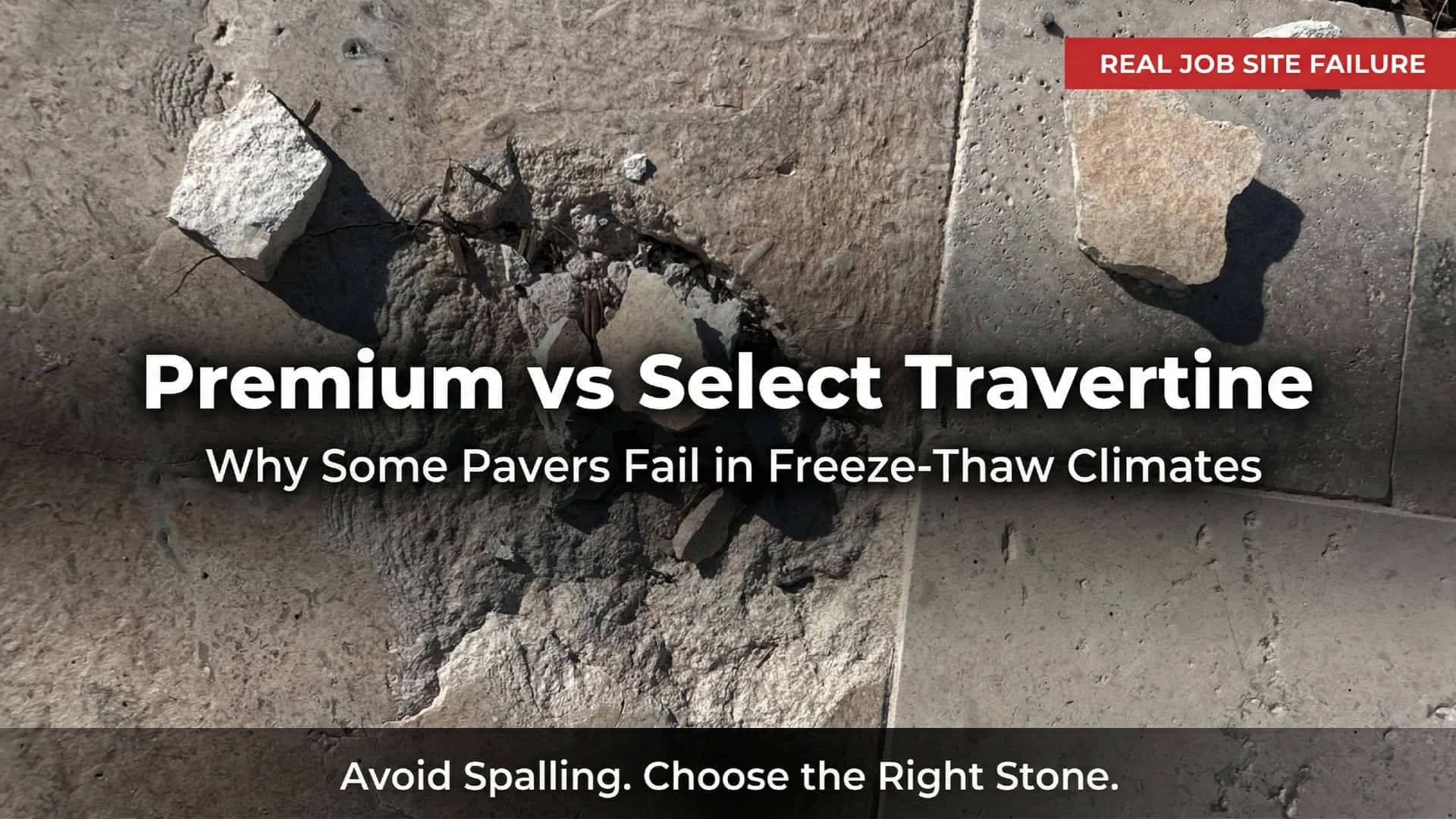
Current collection update: Walnut Travertine is being phased out; Philly Travertine is the recommended collection for new warm-travertine projects. Historical project references below retain the material names originally installed.
Premium vs Select Travertine Pavers & Copings: What You Need to Know (Especially in Freeze-Thaw Regions)
When selecting travertine pavers and pool copings, most homeowners focus on color and price — but the grade of the material is what ultimately determines performance, durability, and long-term appearance.
This is especially critical in regions like Northern Virginia, Maryland, and the Northeast, where constant freeze-thaw cycles put natural stone under extreme stress.
At STONELUX, we supply both premium and select-grade travertine, but the right choice depends on your climate, expectations, and project goals.
Understanding Freeze-Thaw: Why the Northeast Is Different
Unlike colder regions that stay frozen for long periods, or southern climates that rarely freeze, the Mid-Atlantic experiences frequent temperature swings above and below 32°F. This repeated cycle creates stress on outdoor stone surfaces because water enters the material, freezes, expands, and then thaws again.
That repeated movement can lead to:
Surface spalling (flaking or popping)
Internal cracking
Premature material breakdown
In these conditions, the stone’s quality and internal structure determine whether it performs well over time or begins to fail after only a few seasons.
Premium vs Select Travertine: What’s the Real Difference?
1. Water Absorption & Durability
One of the biggest factors in freeze-thaw durability is water absorption.
Lower-grade travertine tends to have higher absorption, while limestone often absorbs even more water. Premium travertine, by comparison, typically has lower and more controlled absorption.
Why does that matter? When water enters the stone and then freezes, it expands. The more water the material absorbs, the more internal pressure it creates during freezing temperatures. Over time, that pressure can lead to cracking, separation, and surface damage.
This is why:
Limestone is generally not recommended for freeze-thaw regions
Lower-grade travertine may deteriorate faster outdoors in colder climates
Premium travertine offers better long-term performance
2. Internal Structure & Material Consistency
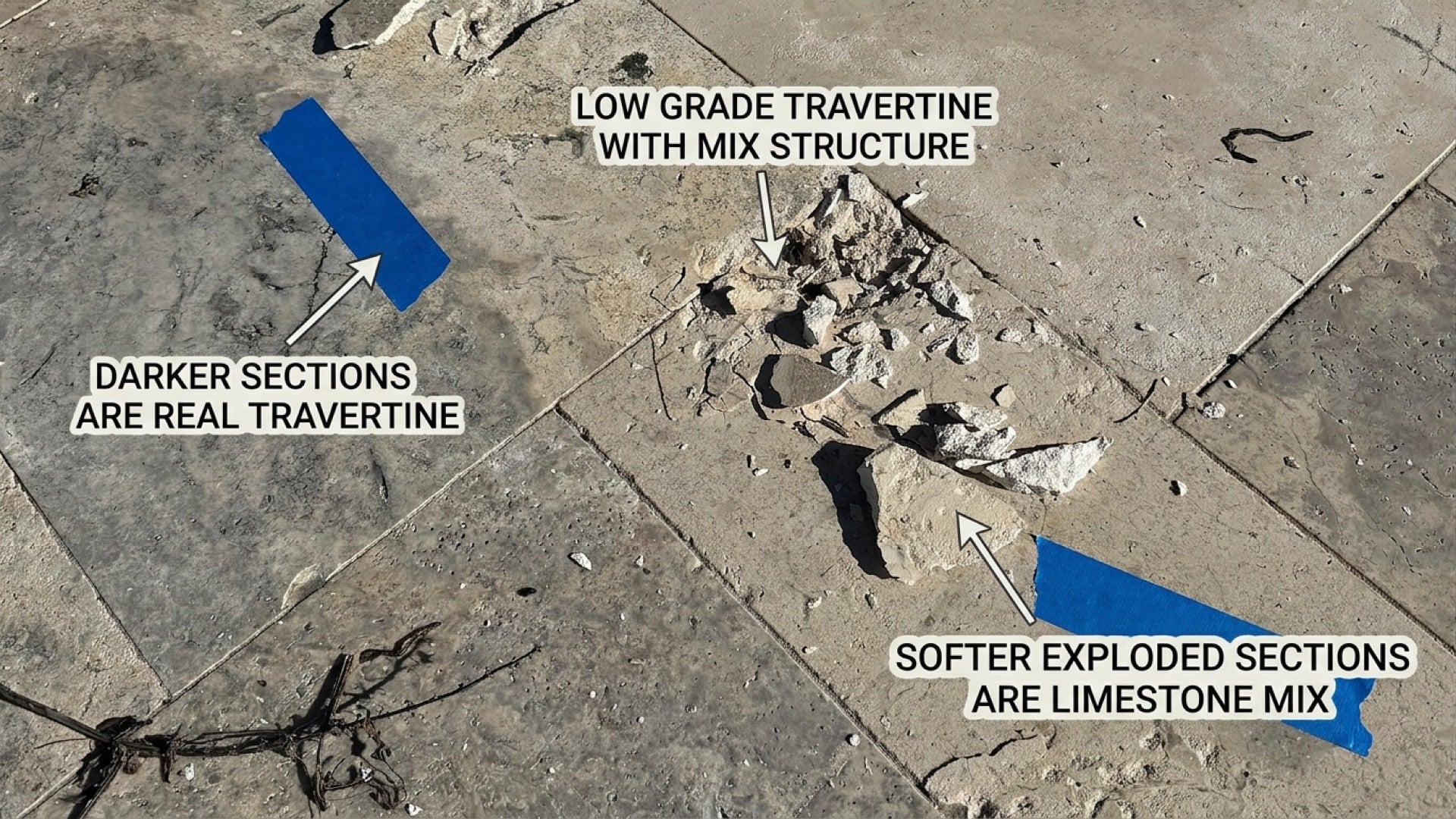
Travertine is closely related to limestone, but not all travertine is the same internally. Lower grades often contain more inconsistent or unstable material composition, including more limestone-like structures, uneven density, and weak bonding between layers.
Premium travertine is usually more:
Uniform in body
Stable in structure
Consistent in density and appearance
This matters even more with high-variation materials like Silver Travertine or Walnut Travertine. If the stone is not well selected and balanced, different areas may expand and contract at different rates, increasing the risk of surface failure or spalling.
In other words, it is not just the color variation that matters — it is the quality and consistency of the stone body.
3. Do Holes and Pits Cause Freeze-Thaw Problems?
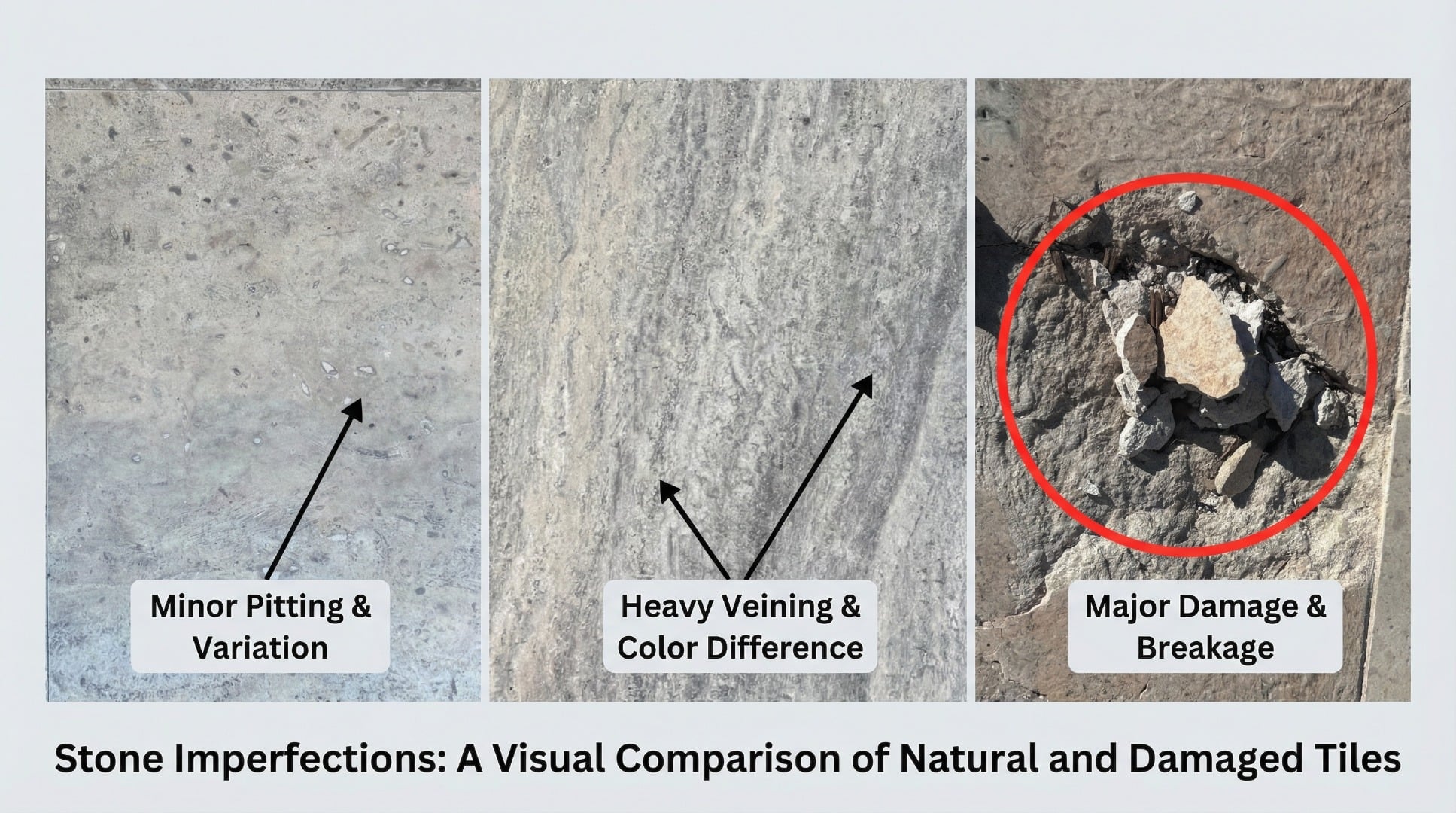
A common misconception is that the natural holes and pits in travertine are the main reason it fails in winter climates. In reality, open holes generally have minimal effect compared to internal absorption.
Open voids allow water to enter and leave more freely. They do not create the same internal pressure as water trapped inside micro-pores throughout the stone body.
The more serious issue is water absorbed into the internal structure of the material — especially when that structure is inconsistent or porous.
That is why many premium travertines with natural holes can still perform very well in freeze-thaw regions, while lower-grade material with poor internal consistency may fail even if the surface looks tighter or cleaner.
Why Many Failures Come from the Wrong Supply Chain
One of the biggest industry issues is that lower-grade travertine is often sold heavily in warm-weather markets like Florida, where freeze-thaw performance is not a major concern. Because those regions are highly price-competitive, lower grades move easily and are then sometimes shipped into northern states where weather demands are completely different.
This creates a serious problem.
A product that may perform acceptably in a hot climate can become a poor choice in the Northeast. Homeowners and contractors may think they are getting a deal, but a small savings upfront can turn into expensive repairs or full replacement later.
At STONELUX, we believe travertine should be selected based on application and region, not just price.
When Should You Choose Premium Travertine?
You should strongly consider premium travertine pavers and copings if:
Your project is in a freeze-thaw region such as Virginia, Maryland, New Jersey, Pennsylvania, New York, or other parts of the Northeast
You want long-term durability and lower risk of cracking or spalling
You are investing in a high-end outdoor living space
You want better consistency, better selection, and a more refined overall look
If you are exploring premium options, you can browse our collections here:
When Is Select Travertine a Good Option?
Select-grade travertine can still be a good fit in the right circumstances.
It may work well when:
The project is in a warm climate with little or no freeze-thaw exposure
The buyer is working within a tighter budget
Long-term winter performance is not a major concern
That said, select-grade material usually offers:
More variation in structure and appearance
Less refined overall aesthetics
Less predictable long-term performance in cold climates
For customers in warmer states who are focused on budget, select grade can make sense. For customers who want a more elevated appearance, premium is still the better-looking option even in mild climates.
Premium vs Select: Cost vs Value
In many cases, the price difference between select and premium travertine is only around $$2 to $3 per square foot.
On a high-end outdoor project, that difference is relatively small compared to the total investment. The stone is the most visible surface of the space. It defines the look of the patio, pool deck, coping, and overall design.
Choosing a better grade often means:
Better visual consistency
Better long-term durability
Better overall project value
For many homeowners, designers, and builders, the small price increase is worth it.
STONELUX Recommendation
At STONELUX, our recommendation is simple:
If you are building in a freeze-thaw region, choose premium travertine
If you are in a warm climate and need a budget-friendly option, select grade may be appropriate
If you want the best appearance, premium is the better choice in any region
Our goal is to help customers choose the right material for their project, climate, and expectations — whether that means premium for performance, select for value, or premium for a more beautiful finished result.
Conclusion: Choose Based on Climate, Performance, and Appearance
Travertine remains one of the most timeless and desirable materials for outdoor living. But not all travertine is equal.
In the Northeast and other freeze-thaw regions, premium travertine pavers and copings are the safer and smarter long-term investment. In warmer regions, select-grade material can still serve a purpose for budget-focused projects. And for anyone who wants the best look possible, premium grade delivers a more refined and consistent result.
If you are comparing options for your next project, explore our curated natural stone collections at STONELUX.
Frequently Asked Questions About Travertine Pavers & Copings
Is travertine good for freeze-thaw climates?
Yes — but only if you use premium-grade travertine. Lower-grade materials with higher water absorption are more likely to crack, spall, or deteriorate in freeze-thaw conditions.
What happens to low-grade travertine in winter?
Low-grade travertine can absorb more water into its internal structure. When that water freezes and expands, it creates pressure inside the stone, leading to surface flaking (spalling), cracking, and long-term damage.
Is limestone a good alternative to travertine in the Northeast?
In most cases, no. Limestone typically has higher water absorption rates (around 3–5%), making it more vulnerable to freeze-thaw damage compared to premium travertine.
Do travertine holes cause freeze-thaw damage?
No. Natural holes and pits in travertine usually have minimal impact. The real issue is water absorbed into the internal microstructure of the stone, not visible surface voids.
What is the difference between premium and select travertine?
Premium travertine is more consistent in structure, density, and appearance, with lower water absorption. Select-grade travertine may have more variation, weaker internal structure, and reduced durability in colder climates.
Can I use select travertine for my project?
Yes, if you are located in a warm climate with little to no freeze-thaw cycles. For Northeast and Mid-Atlantic regions, premium travertine is strongly recommended.
Is premium travertine worth the extra cost?
In most cases, yes. The price difference is typically only $2–$4 per square foot, but it significantly improves durability, appearance, and long-term performance.
Why do some travertine patios fail after a few years?
This is often due to using lower-grade material not suited for freeze-thaw environments. Many products sold in warm regions are not tested for colder climates and may deteriorate quickly when exposed to freezing conditions.