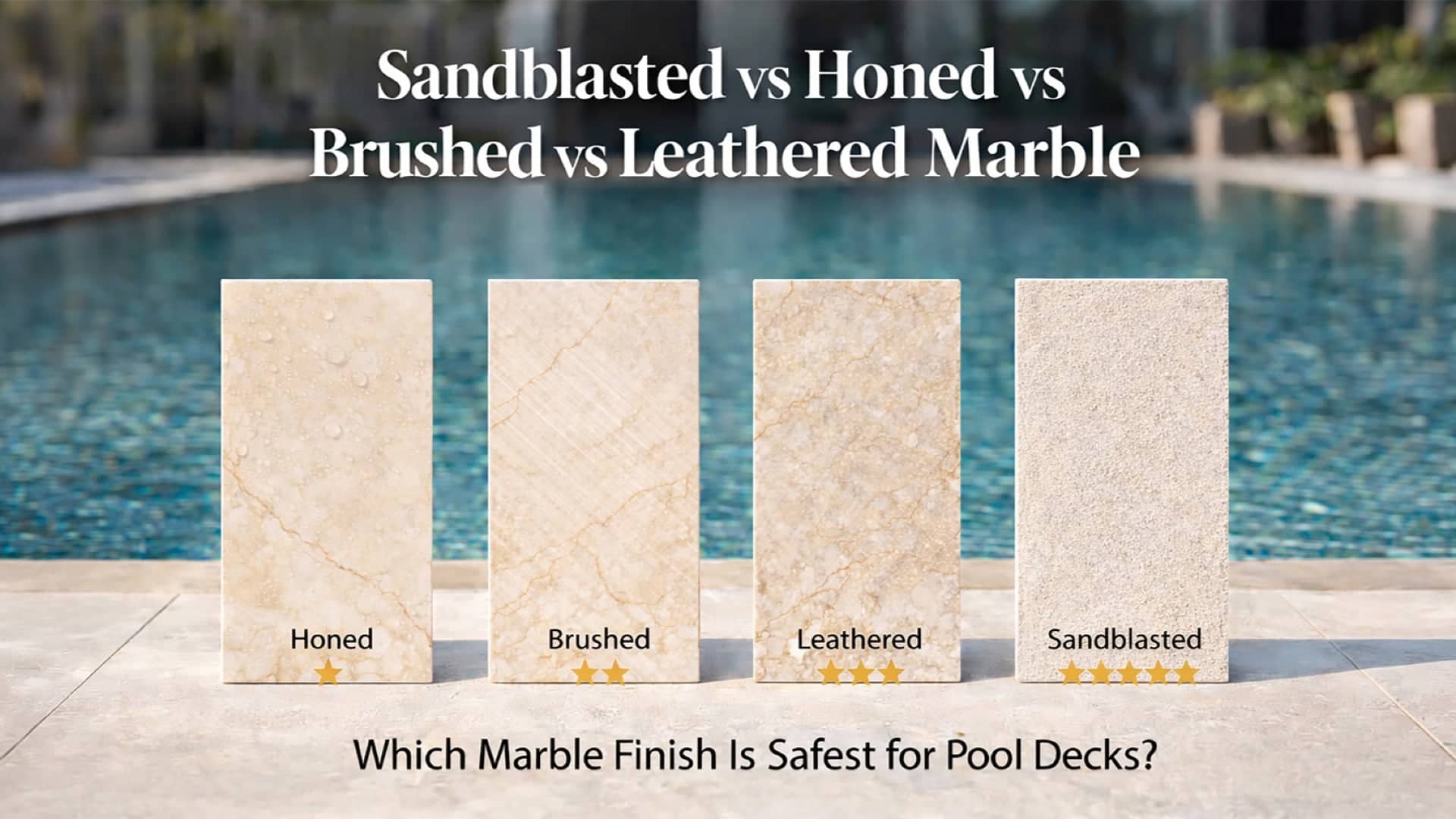
When selecting marble for a pool deck, patio, or outdoor walkway, many homeowners focus on color and style — but the finish of the stone is the single most important factor affecting safety. Some finishes that appear textured in a showroom can become surprisingly slippery once exposed to water, sunscreen, dust, and everyday outdoor conditions.
This guide explains the real-world performance differences between honed, brushed, leathered, and sandblasted marble, and why finish selection plays a critical role in long-term outdoor safety.

The Hidden Risk: Why Marble Finish Matters Outdoors
Natural marble surfaces are inherently smooth. When moisture accumulates, a thin film of water can significantly reduce traction. Outdoor environments introduce additional factors — such as sunscreen oils, dust, algae, and foot traffic — that can further reduce grip over time.
Because of this, finish texture, not just stone type, determines how safe the surface remains when wet.
Honed Marble: Elegant Appearance, Limited Wet Traction
Honed marble is frequently chosen for its soft, matte look. However, the finish remains microscopically smooth, which allows water to sit on the surface rather than disperse.
Common outdoor concerns with honed marble:
Reduced traction when wet
Slippery conditions around pools and shaded areas
Surface contamination (oils, dust) further decreases grip
Not designed specifically for high-moisture outdoor environments
While honed finishes perform well indoors, they are often not ideal for pool decks or exterior walkways where slip resistance is critical.
Brushed Marble: Light Texture with Moderate Slip Resistance
Brushed finishes are created using mechanical brushes that produce a lightly textured surface. This texture improves traction compared to honed finishes, but the texture is relatively shallow and may gradually smooth over time in high-traffic areas.
Limitations of brushed finishes:
Moderate improvement in grip compared to honed marble
Surface texture can wear down over years of use
Still becomes slippery under heavy moisture exposure
Often selected primarily for aesthetics rather than safety performance
For wet outdoor areas, brushed finishes may provide some improvement, but they may not deliver consistent long-term traction.
Leathered Marble: Decorative Texture with Variable Performance
Leathered marble is popular for its rich visual depth and soft textured feel. However, the finishing process primarily enhances appearance rather than creating a deep anti-slip structure. Depending on stone density, finishing technique, and sealing treatments, slip resistance can vary significantly.
Key considerations for leathered marble outdoors:
Texture may appear more aggressive than it actually is
Sealing treatments can reduce traction
Slip performance varies between batches and suppliers
Not engineered specifically for wet-area traction performance
Although leathered marble offers a premium aesthetic, it may not provide the consistent grip needed for pool decks and wet walkways.
Sandblasted Marble: The Outdoor Safety Standard
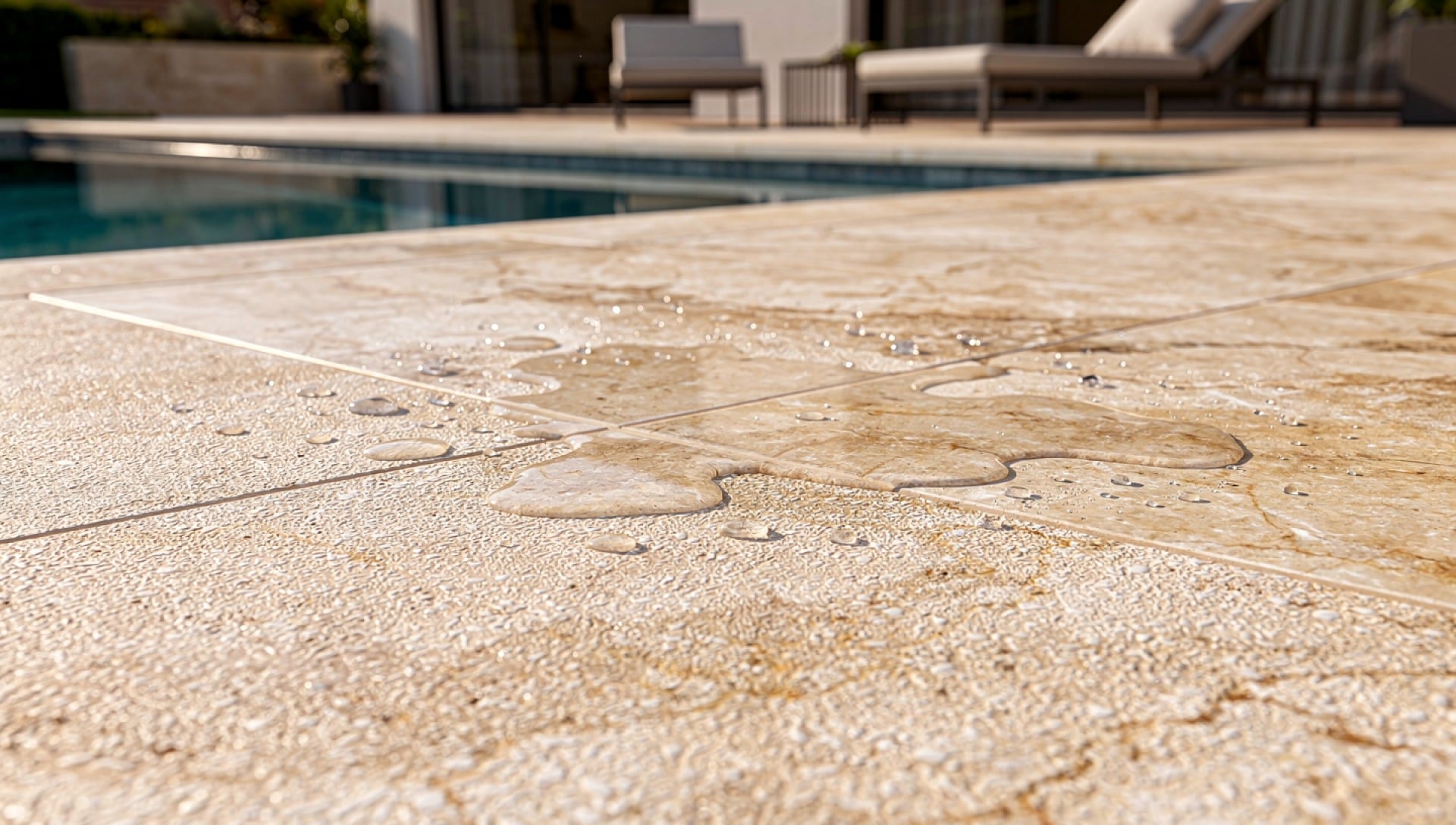
Sandblasted marble is produced by blasting the stone surface with fine abrasive material to create a uniform micro-textured finish specifically designed for outdoor traction. Unlike decorative textures, this process produces a consistent, durable surface that maintains grip even under frequent water exposure.
Advantages of sandblasted marble:
Superior slip resistance in wet environments
Durable texture that maintains performance over time
Ideal for pool decks, patios, coping, stairs, and walkways
Balances safety, durability, and natural stone aesthetics
For these reasons, sandblasted marble is widely used in professional outdoor installations where long-term safety performance is a primary requirement.
Marble Finish Comparison for Pool Decks and Outdoor Areas
Marble Finish | Surface Texture | Slip Resistance (Wet Conditions) | Long-Term Traction Performance | Recommended Applications |
|---|---|---|---|---|
Honed | Smooth matte surface | Low | Surface remains smooth; traction stays limited | Interior flooring, low-moisture areas |
Brushed | Light mechanical texture | Moderate | Texture may gradually smooth in high-traffic areas | Decorative patios, light outdoor use |
Leathered | Decorative textured finish | Moderate (varies by finishing method) | Performance may vary depending on sealing and wear | Aesthetic-focused exterior or interior projects |
Sandblasted | Uniform micro-textured anti-slip surface | High | Durable texture designed to maintain traction long term | Pool decks, coping, walkways, stairs, wet outdoor environments |
Which Marble Finish Should You Choose?
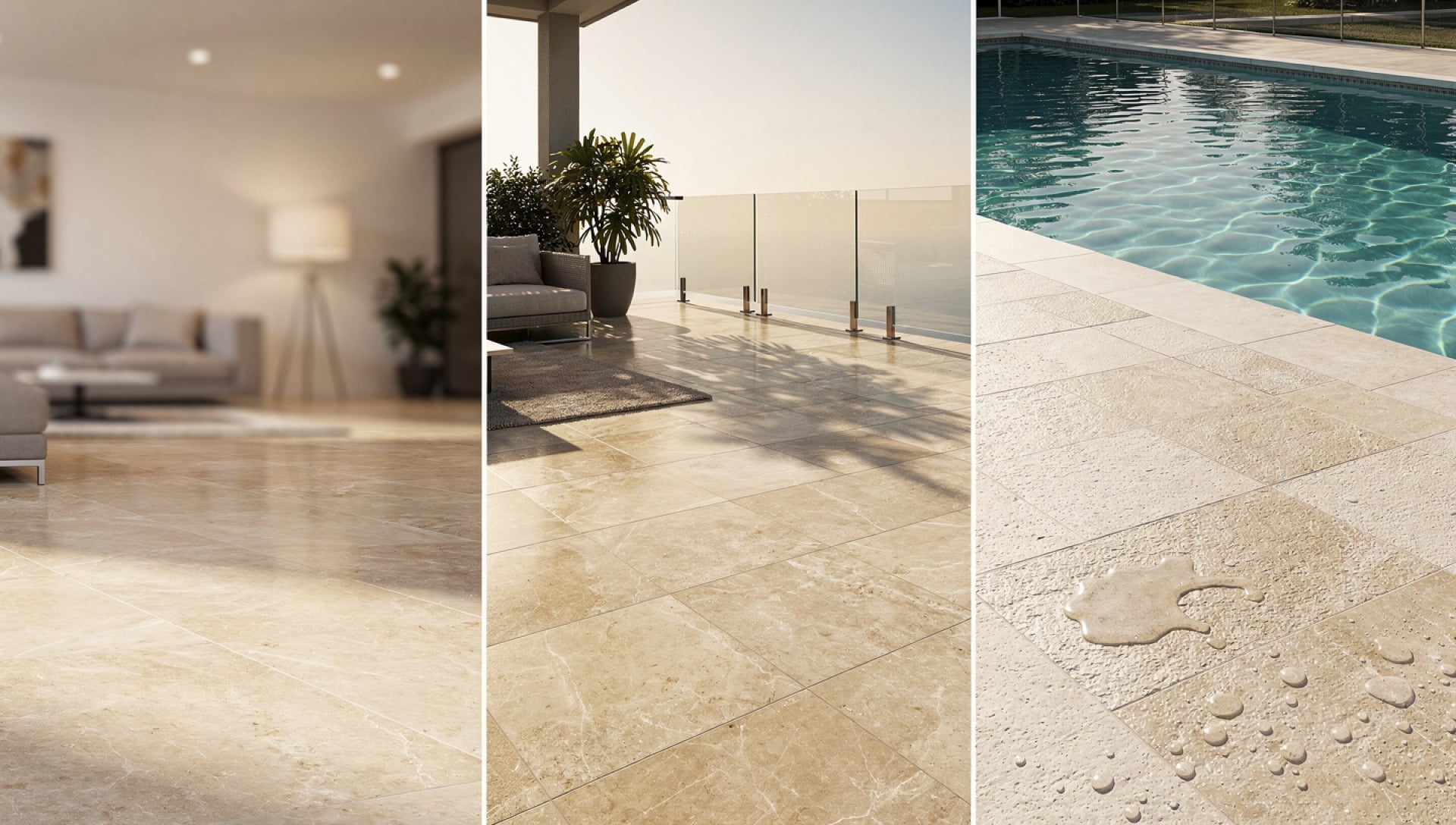
Choosing the right marble finish depends primarily on exposure to moisture and expected foot traffic:
Indoor or low-moisture spaces: Honed, brushed, or leathered finishes may be suitable when slip resistance is not a primary concern.
Decorative outdoor areas with limited water exposure: Brushed or leathered finishes can provide a balance between texture and aesthetics.
Pool decks, coping, steps, and wet outdoor environments: A sandblasted finish is typically the safest and most reliable choice, offering consistent traction designed specifically for outdoor use.
Selecting the appropriate finish at the planning stage helps ensure that outdoor spaces remain not only visually appealing but also safe and durable for long-term everyday use.
Frequently Asked Questions
Is honed marble slippery when wet?
Yes. Honed marble remains relatively smooth and can become slippery when exposed to water or surface contaminants.
Is leathered marble slip resistant for pool decks?
Leathered finishes provide some surface texture, but slip resistance varies depending on the finishing method and may not provide consistent outdoor traction.
Is brushed marble safe for outdoor patios?
Brushed marble offers improved grip compared to honed finishes but may still become slippery under heavy moisture exposure.
What is the safest marble finish for pool decks?
Sandblasted marble is generally considered the most reliable outdoor finish due to its uniform micro-textured surface designed for traction.